Hiring a single employee requires a significant investment of time, money, and energy. In today’s highly competitive talent market, helping new hires integrate smoothly into the company culture, build community within their teams, and perform effectively from the start has become a critical challenge for every organization.
In Japan, many companies are shifting from traditional mass hiring of new graduates to mid-career recruitment. However, the roles between HR and hiring managers are often unclear, and as a result, mid-career hires sometimes struggle to reach their full potential, leaving the organization prematurely.
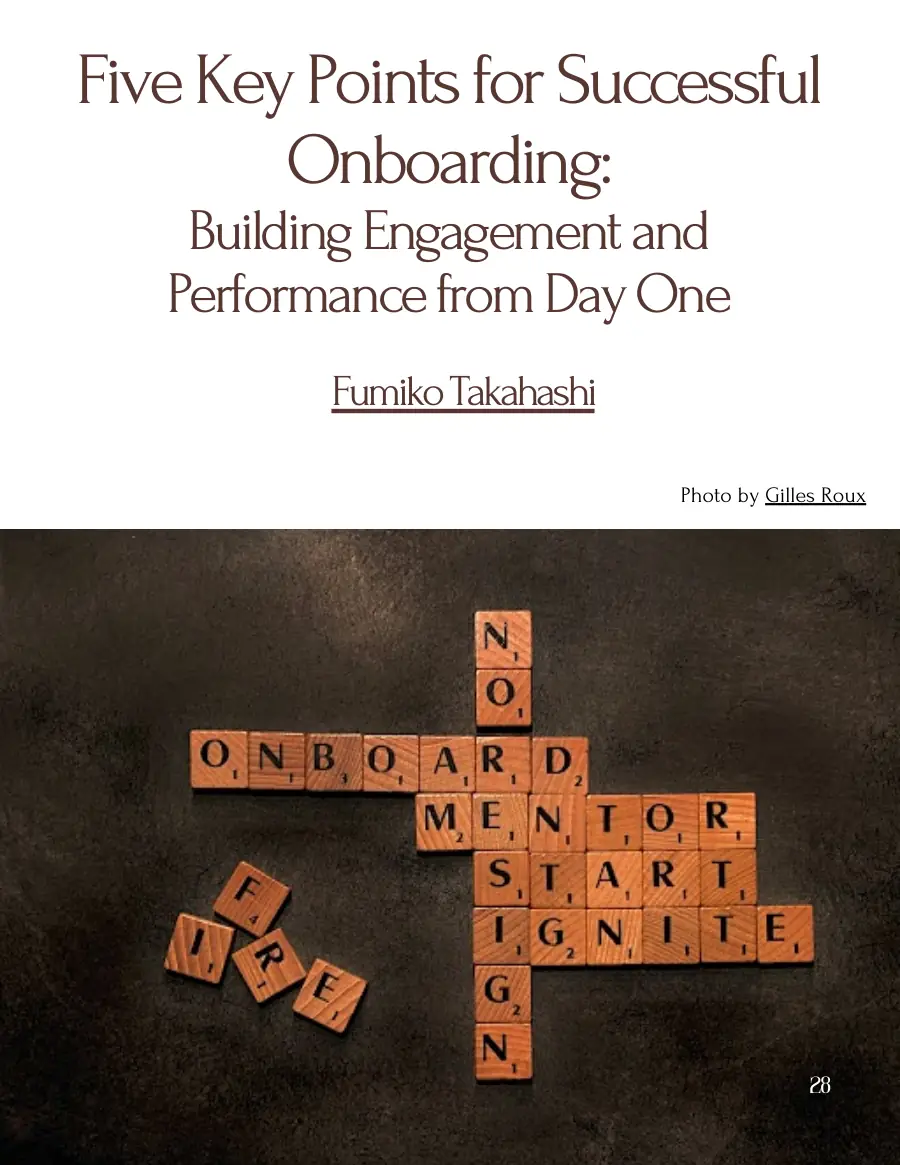
This is why onboarding has become such an essential process. Onboarding is not just a one-day orientation — it is a structured, cross-functional journey that enables employees to build confidence, connection, and capability from their very first day.
When someone joins a new workplace, they often feel uncertainty: ‘Can I really fit in here?’ ‘Will this team accept me?’ Addressing these concerns and transforming uncertainty into trust and belonging is the true essence of onboarding — and one of the most important roles of both HR and managers.
This article introduces five key points for successful onboarding that can help organizations build engagement and accelerate performance during this critical period.
1. Define Project Members and Stakeholders - Onboarding Is a Team Sport
The first step to successful onboarding is to define who is involved and what roles they play.
While HR usually coordinates the process, the ultimate owner of onboarding should be the hiring manager, who is closest to the employee’s actual work. However, since most managers are already managing multiple responsibilities, onboarding can easily become an additional burden.
To prevent this, organizations should involve multiple departments and clarify responsibilities to avoid duplication or gaps. When roles are clearly defined, onboarding becomes a shared organizational process rather than a manager’s individual task.
A well-rounded onboarding team might include:
- HR Department: Oversees design, provides standardized tools and templates, and manages communications.
- Hiring Manager: Defines goals, provides feedback, ensures alignment with team objectives.
- Buddy or Mentor: Offers daily support and guidance on both tasks and culture.
- IT Department: Handles system access, equipment setup, and troubleshooting.
- Finance & Procurement: Supports administrative workflows and internal process learning.
- Colleagues & Cross-Functional Partners: Encourage relationship-building and collaboration.
- Senior Leadership: Reinforces company vision through welcome messages or group sessions.
When all stakeholders are aligned, onboarding evolves into a company-wide initiative that strengthens culture and accelerates success.
Onboarding is not just a one-day orientation — it’s a journey.
2. Set Clear 90-Day Goals — Defining What Success Looks Like
Although onboarding duration varies by company, a 90-day framework often works best. The employee experience during the first three months significantly influences long-term engagement, confidence, and retention.
Defining specific goals for each month gives both structure and direction:
- Month 1: Orientation & Activation - Understanding tools, workflows, and company culture.
- Month 2: Ownership & Collaboration - Deepening engagement with stakeholders and responsibilities.
- Month 3: Independence & Confidence - Contributing meaningfully with growing autonomy.
Increasingly, leading organizations also view onboarding as a learning and reskilling process. Integrating learning elements — such as AI literacy, data handling, communication styles, or collaboration skills — transforms onboarding into a foundation for continuous growth.
3. Ensure Quality and Leverage Digital Tools — Delivering a Consistent Experience
Onboarding quality often varies by team or manager. To ensure fairness and consistency, organizations should focus on standardization and digitalization.
Mastering the use of business tools and applications is particularly critical for performance. Hiring managers should identify in advance which tools are essential for the role and provide clear guidance on how to use them effectively. If generative AI is available within the organization, it can automatically summarize internal knowledge, consolidate FAQs, and reduce manual workload.
Additional digital practices include:
- Checklists and templates for structured progress management.
- Onboarding portals or LMS platforms for centralized materials and visibility.
- Chatbots or automated reminders for smoother task coordination.
- Digital feedback systems for continuous improvement.
Technology supports onboarding, but people make it succeed.
4. Strengthen Human Connections — The Foundation of Psychological Safety
The success of onboarding depends not only on systems but also on human connection. In hybrid or remote settings, organizations must create intentional opportunities for meaningful interactions.
Whether new hires feel psychologically safe and culturally connected during onboarding has a direct impact on engagement, retention, and performance. The people they meet and the experiences they have during this period profoundly shape their sense of belonging.
- Welcome lunches or virtual coffee chats to foster informal connections.
- Regular 1-on-1s with buddies or mentors for both task and emotional support.
- Cross-department networking sessions to broaden relationships.
- Participation in company-wide events or All Hands meetings for deeper engagement.
Some companies also host executive lunches with new hires, allowing leadership to hear fresh perspectives while strengthening connection and trust. Balancing respect for tradition with openness to change creates a more resilient and forward-thinking organization.
5. Embrace Diversity and the Global Context — Turning Differences into Strengths
Today’s workplaces are more diverse and global than ever before. Effective onboarding must reflect this reality by being inclusive and adaptable.
- Provide multilingual materials and translation support for international employees.
- Design hybrid programs that balance in-person and remote experiences.
- Offer cross-cultural communication training to bridge understanding.
- Implement remote buddy systems to build connection across locations.
Diversity-centered onboarding helps build a psychologically safe, globally aware culture — one where individuals feel valued for their uniqueness and empowered to contribute fully.
6. Looking Beyond 90 Days — Continuous Support and Measurement
Onboarding doesn’t end after 90 days — that’s when it truly begins. A follow-up check-in around the three-month mark helps managers and HR assess adjustment, motivation, and performance.
Tracking metrics such as retention, engagement scores, and performance evaluations allows organizations to identify what’s working and what needs improvement. By continuously refining the onboarding experience, companies can maximize their hiring investment while supporting long-term employee growth.
Conclusion
Onboarding is not just a process — it’s the beginning of an employee’s story within the organization. By defining stakeholders clearly, setting structured 90-day goals, ensuring quality through digital tools and AI, fostering human connection, embracing diversity, and sustaining continuous improvement, companies can create onboarding experiences that build engagement, confidence, and performance from day one.
When employees feel, 'I’m glad I joined this company,' that’s when onboarding has truly succeeded — and when an organization begins to grow from the inside out.