

Org chart templates
86 org charts to copy, adapt or hold up against your own. Each one says when the structure fits and what goes wrong with it, and downloads as a PowerPoint file you can edit.
Every box is a role, not a person. The set runs from the textbook structure types to the charts we see most in our own work: foreign subsidiaries in Japan, Japanese governance forms, and HR teams of every size. Pair a chart with the matching job description template when you open the seat.
Structure types
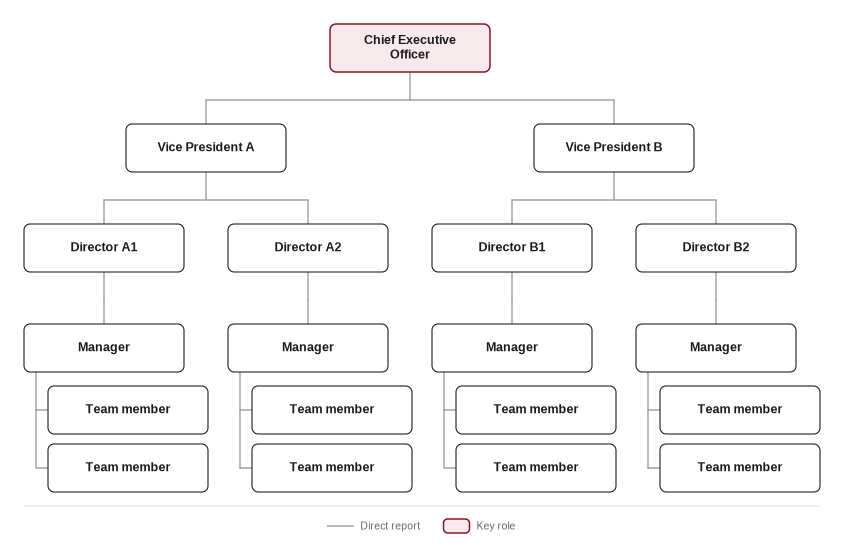 Hierarchical (line) structureWork is stable and repeatable, and you need one clear owner for every decision.
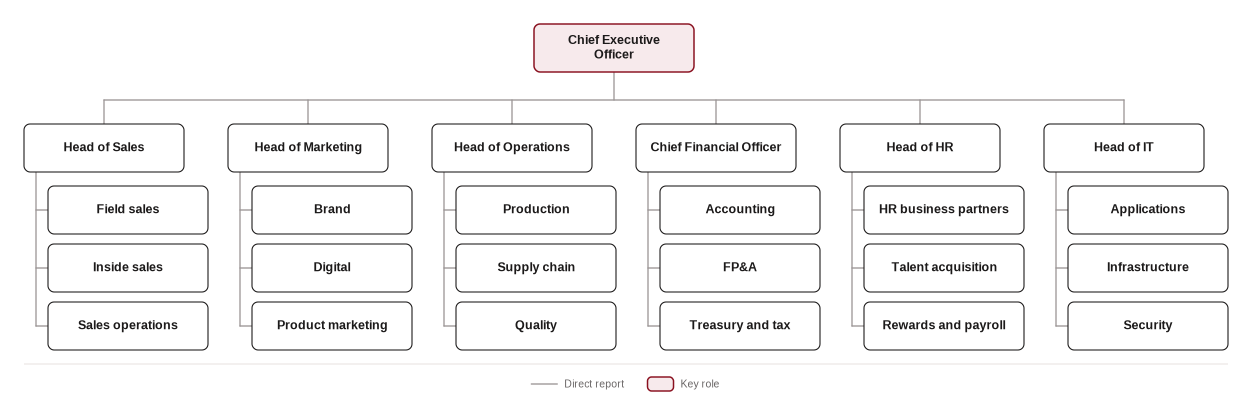 Functional structureOne main product or market, and depth of expertise matters more than speed across functions.
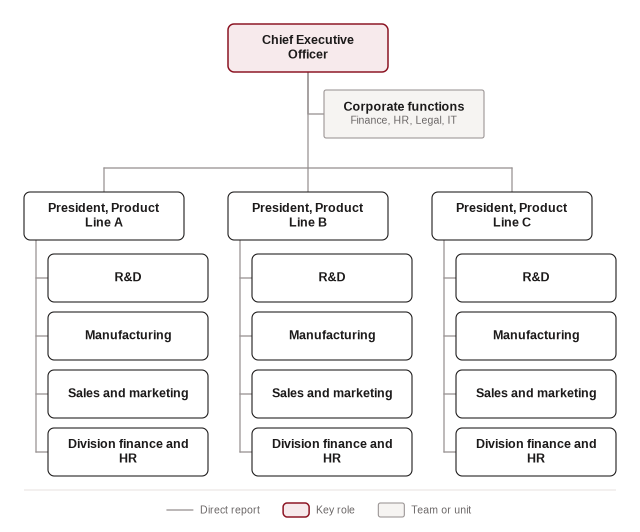 Divisional structure by productProduct lines have different customers, competitors and economics, and each needs its own P&L owner.
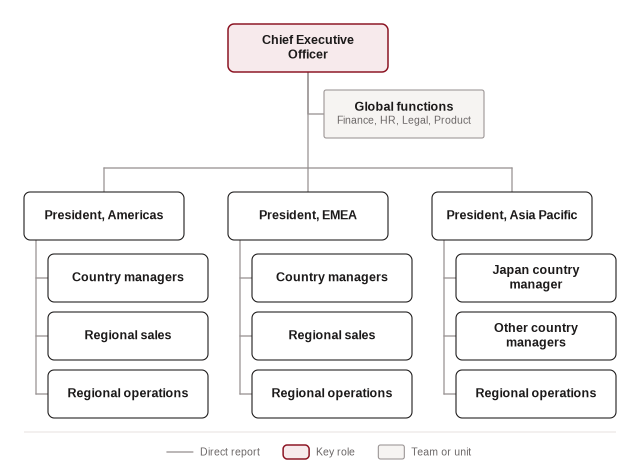 Divisional structure by geographyCustomers, regulation or channels differ enough by region that local leaders need real authority.
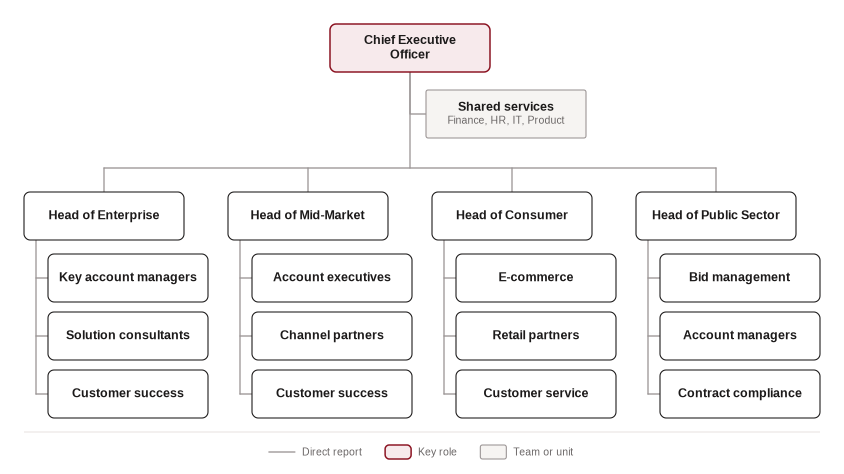 Divisional structure by customer segmentThe same products are sold to segments that buy in very different ways.
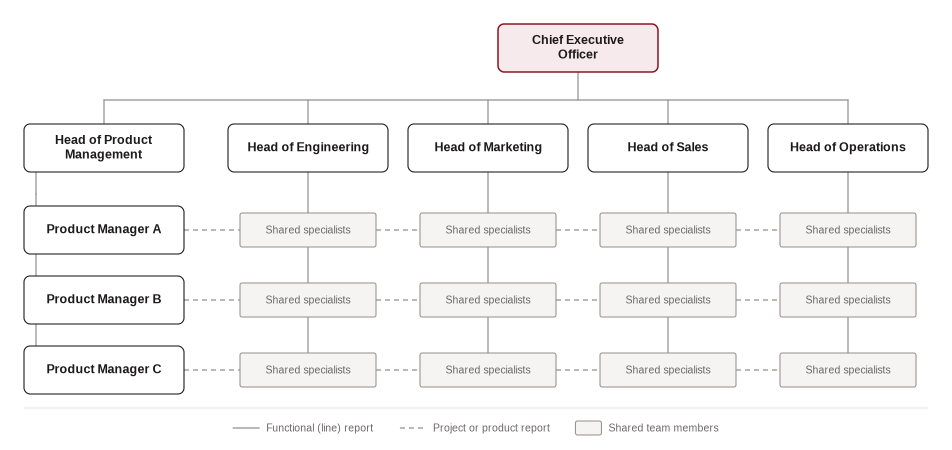 Matrix: function by productSpecialists are scarce and several products need them at once.
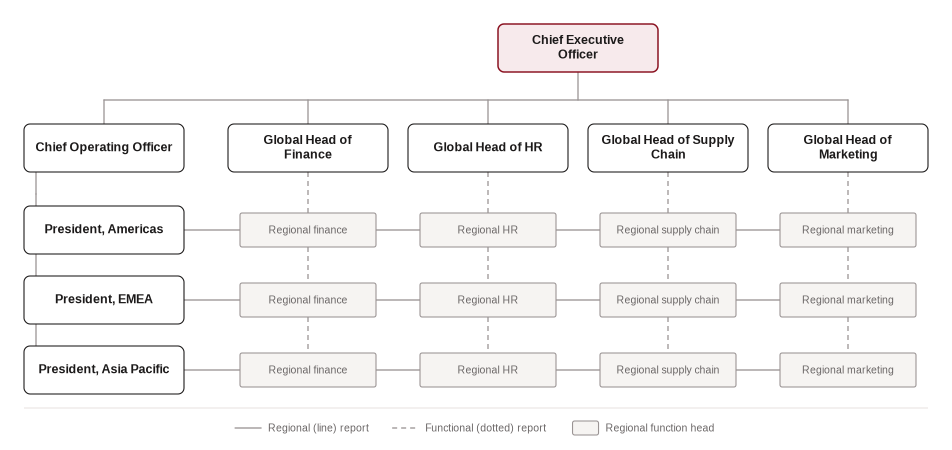 Matrix: function by regionRegional presidents own the P&L while global function heads own standards and careers.
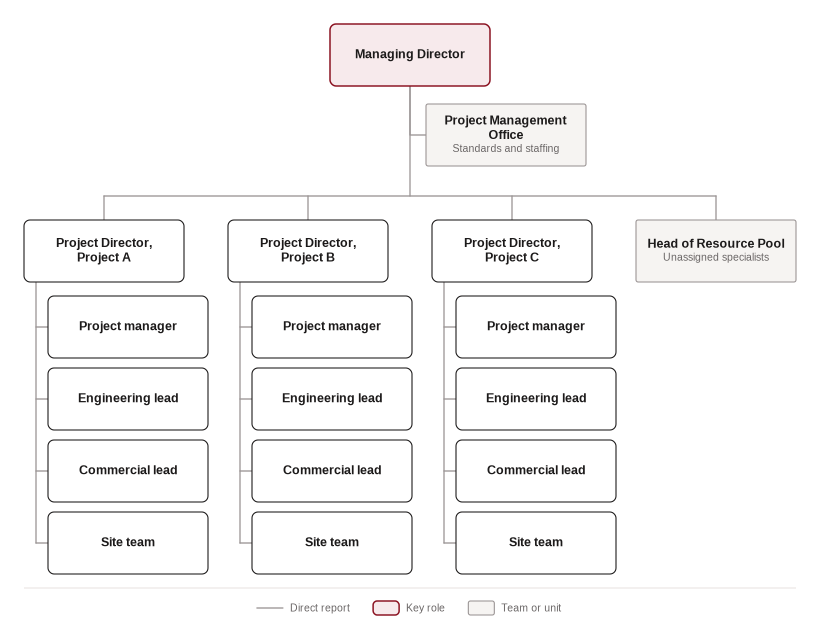 Project-based structureRevenue comes from distinct projects with a start and an end, such as construction, consulting or engineering.
 Flat structureThe team is small and senior enough to work without supervisors between them and the founder.
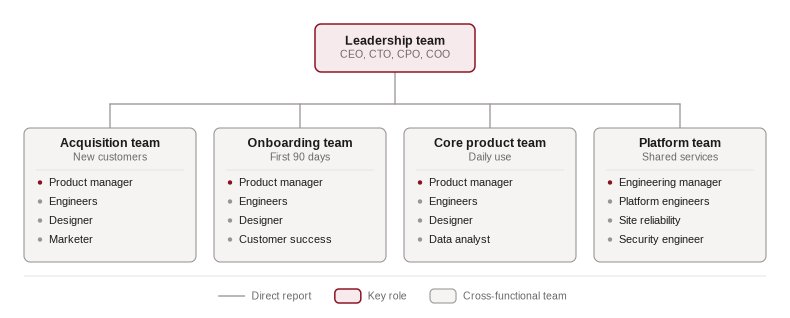 Team-based structureWork is organized around outcomes, and each team holds every skill it needs to deliver.
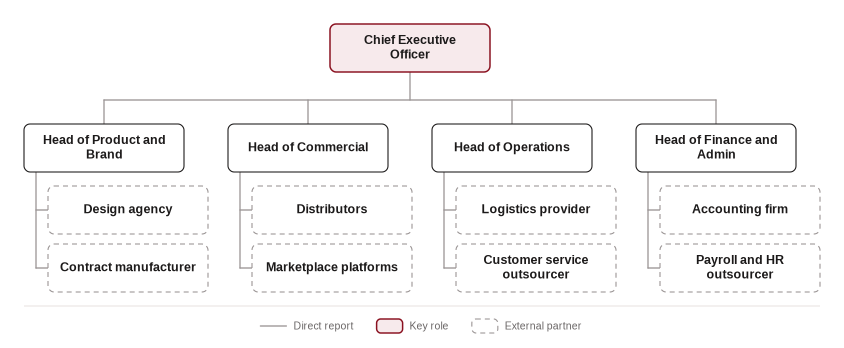 Network structureA small core owns brand, design and customers, and partners do the rest.
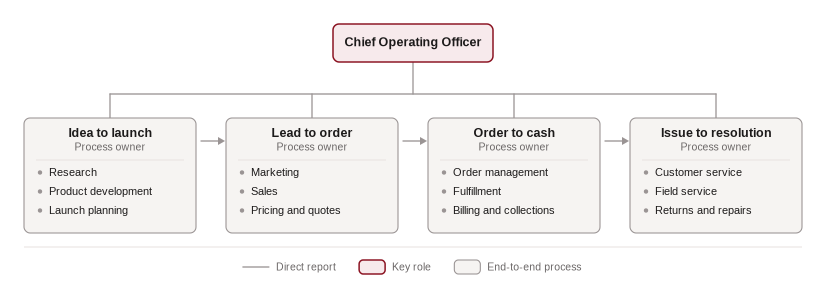 Process-based structureCustomers judge you on an end-to-end flow, and handoffs between functions are where things fail.
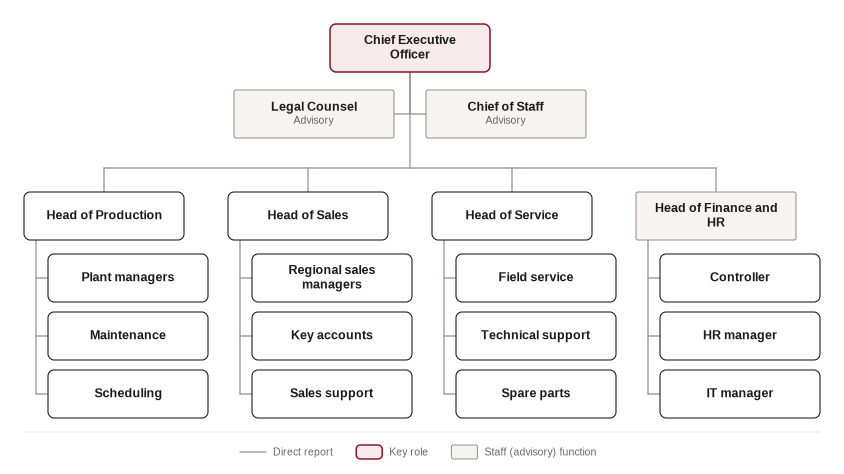 Line-and-staff structureLine managers run the operation and need specialist advice that does not sit in the chain of command.
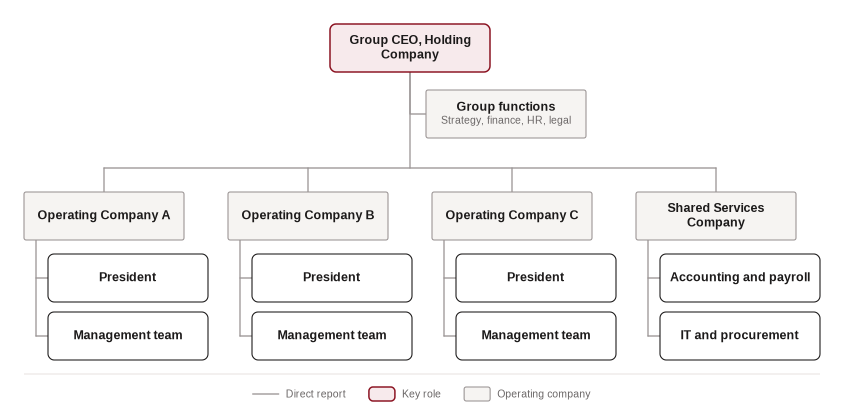 Holding company structureThe group owns businesses that share capital and governance but little else.
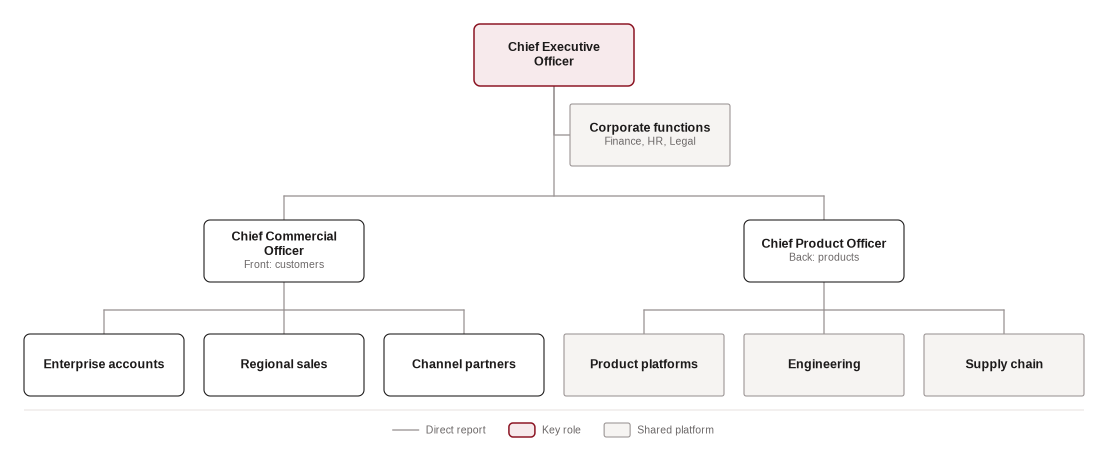 Front-back hybrid structureCustomer-facing units need freedom to sell while products and platforms are built once for everyone.
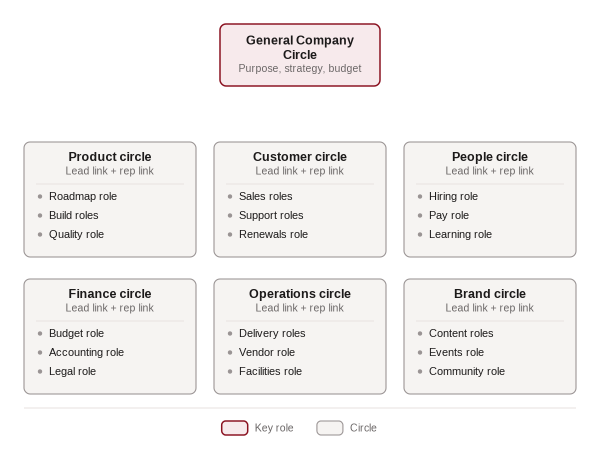 Circle-based (self-managed) structureYou want authority attached to roles rather than managers, with teams setting their own rules.
Size and stage
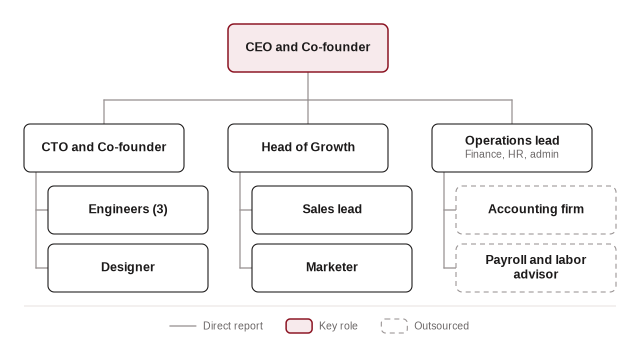 Startup, about 10 peopleEveryone reports to a founder and wears several hats. Admin work is bought in, not hired.
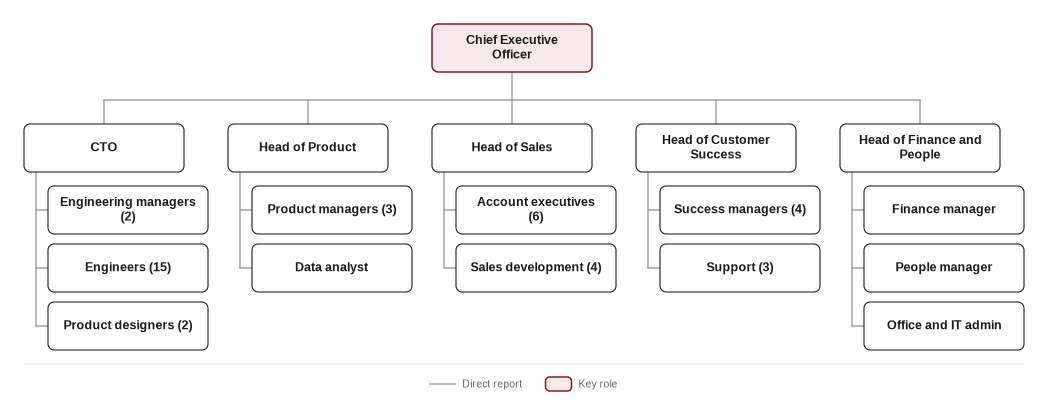 Scale-up, about 50 peopleThe first functional heads arrive and the founders stop managing everyone directly.
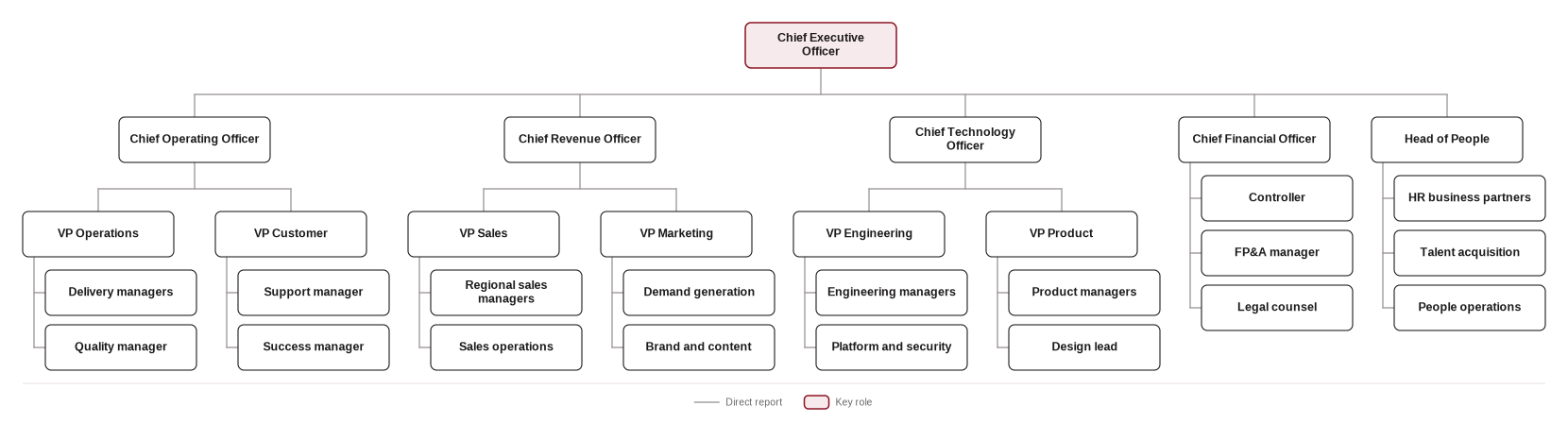 Mid-size company, about 200 peopleFunctions are fully formed, a second management layer exists, and HR becomes its own seat at the table.
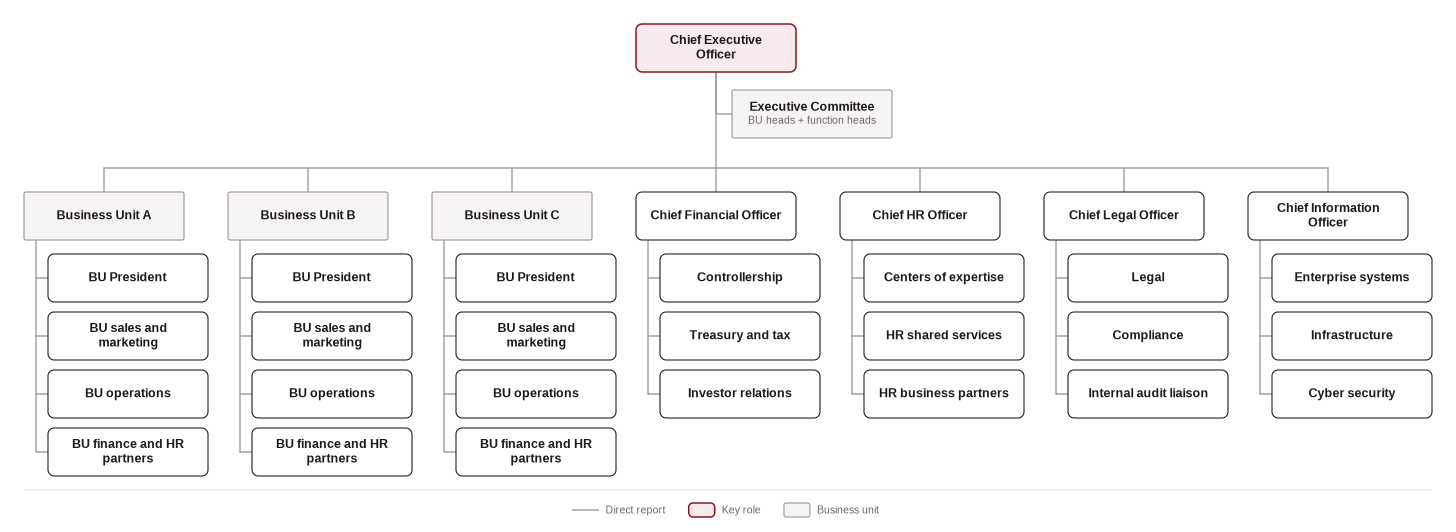 Large enterprise, 1,000+ peopleSeveral business units carry their own P&L while corporate functions set policy and run shared services.
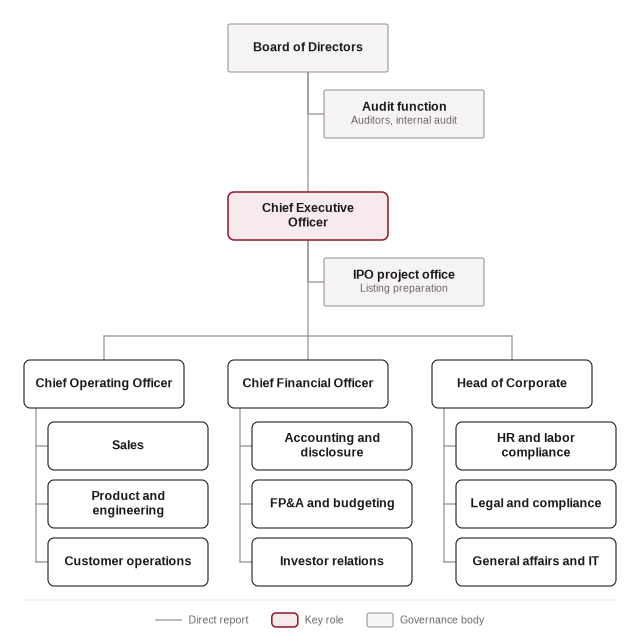 Pre-IPO companyThe company is building the controls a listing requires: independent board, audit, disclosure and investor relations.
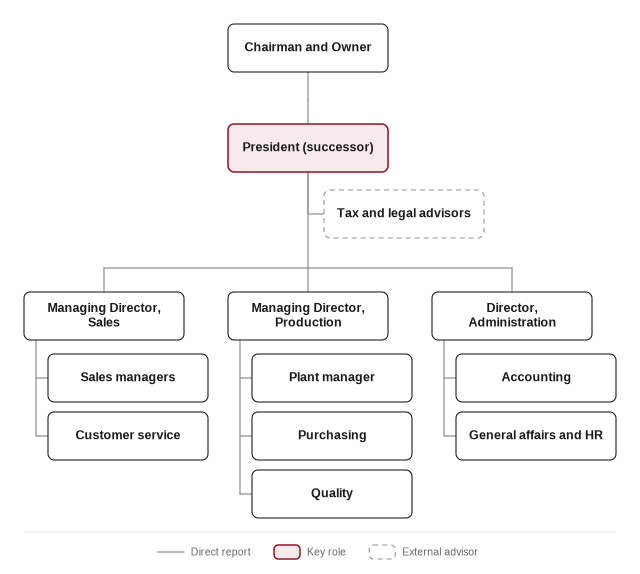 Owner-managed company with a successorA founder or family still runs the business and the next generation is being prepared to take over.
Japan
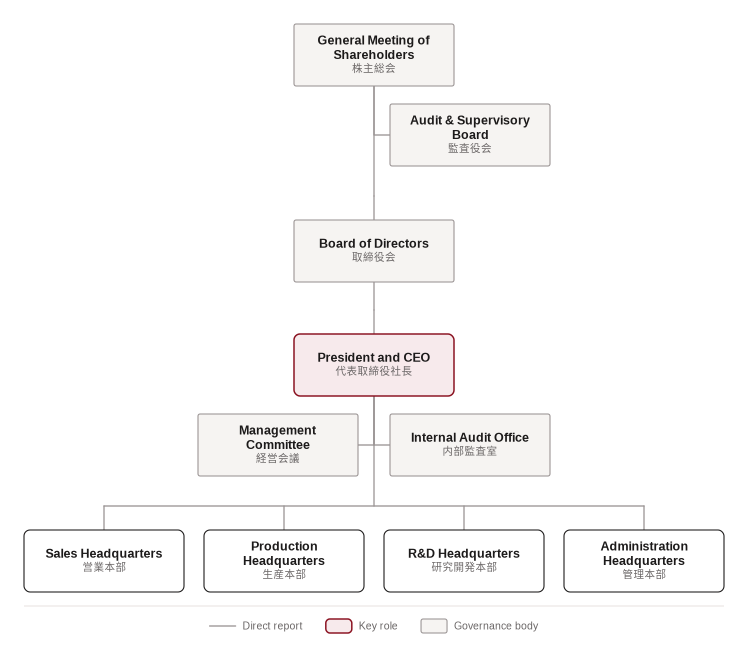 Japanese company with an Audit & Supervisory BoardThe traditional Japanese governance form (監査役会設置会社): directors run the company and separate statutory auditors watch them.
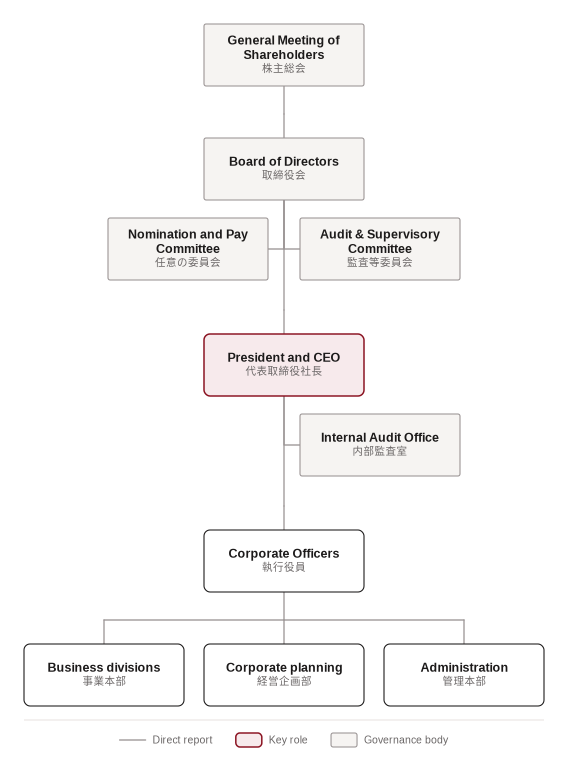 Japanese company with an Audit & Supervisory CommitteeA form many listed companies have moved to since 2015 (監査等委員会設置会社): the Audit & Supervisory Committee sits inside the board.
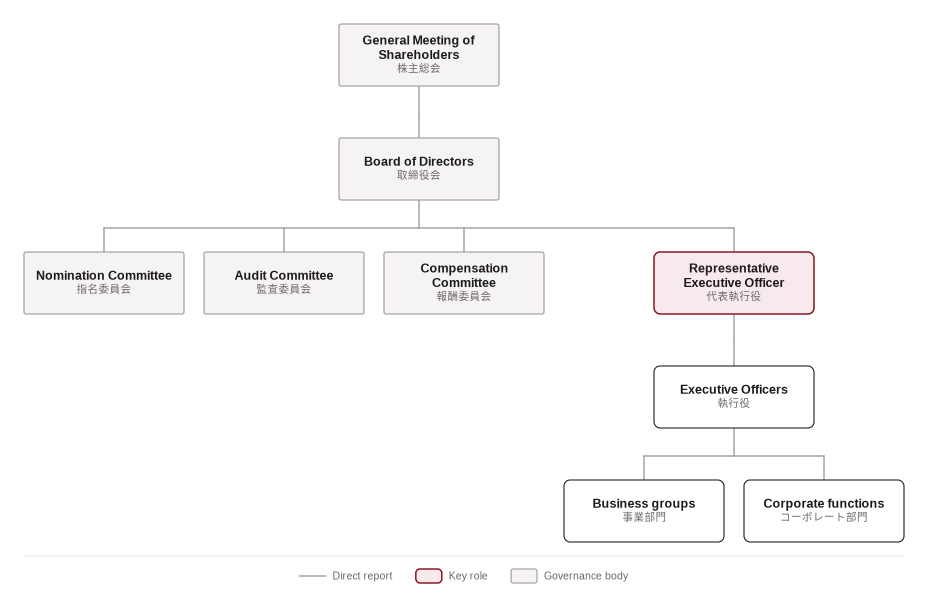 Japanese company with three committeesSupervision and execution are split (指名委員会等設置会社): the board supervises through three committees and executive officers manage.
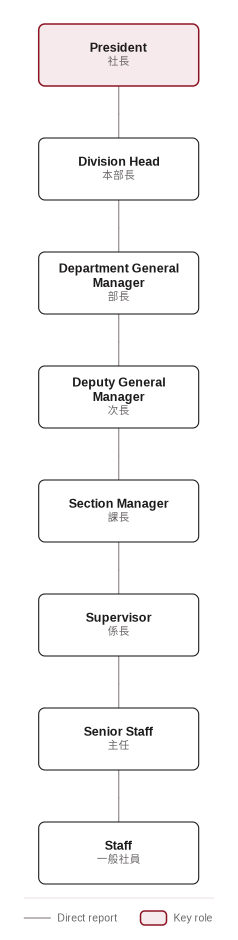 Japanese management ladder: honbu, bu, kaMapping Japanese titles to levels when benchmarking roles or explaining the hierarchy to an overseas head office.
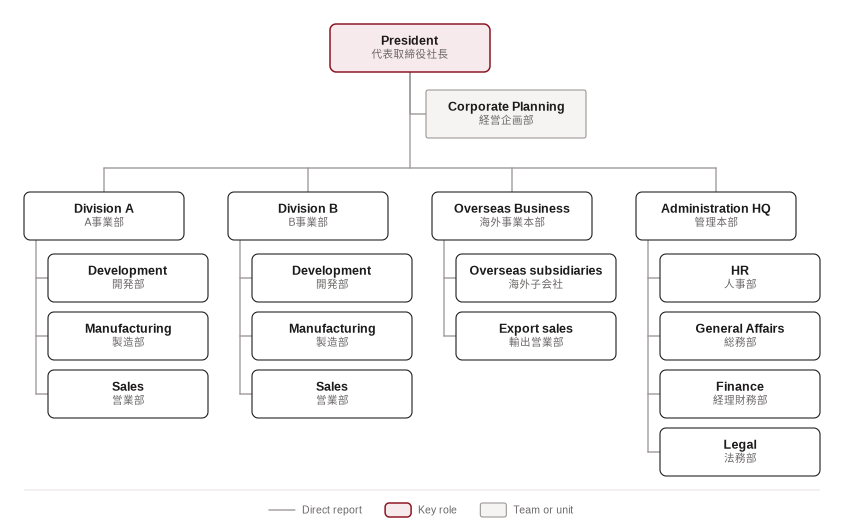 Japanese manufacturer with business divisionsThe classic jigyobu system (事業部制): each business division runs development, production and sales under a corporate headquarters.
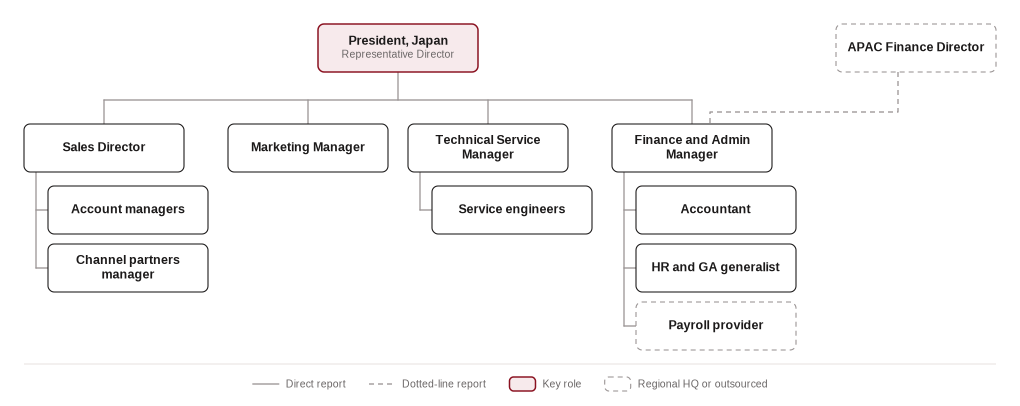 Foreign subsidiary in Japan, 15–50 peopleA sales-led KK where the country manager is also representative director and back-office work is partly outsourced.
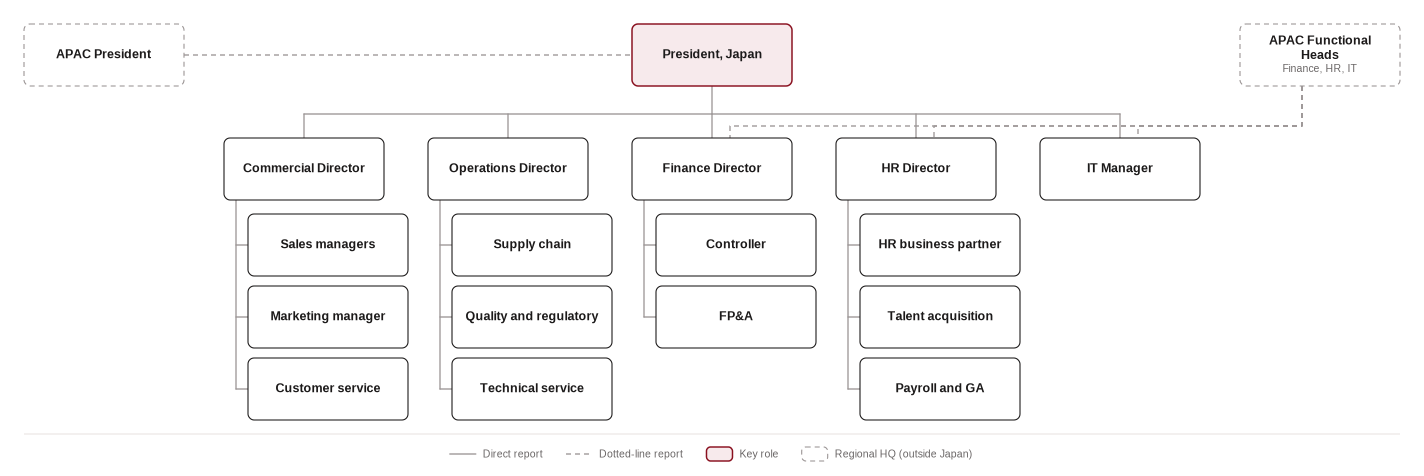 Foreign subsidiary in Japan, 100–300 peopleFunctions report to the Japan president day to day and to regional function heads on standards and budgets.
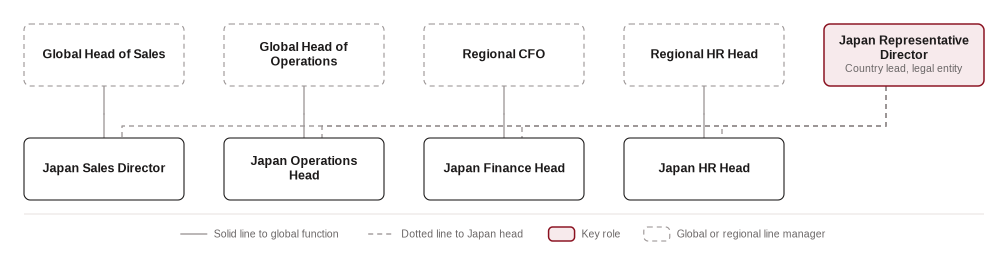 Foreign subsidiary run by global functionsEach function in Japan reports to its global or regional head, and the country head coordinates without owning the P&L.
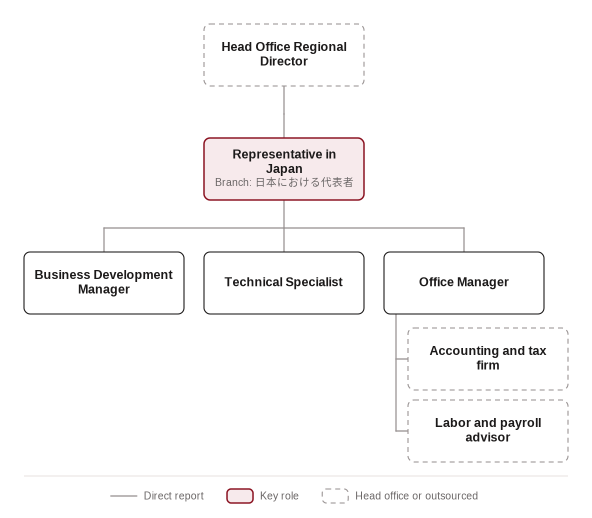 Japan branch or representative officeA first step into Japan before a KK is set up: a small team under a representative in Japan, managed from head office.
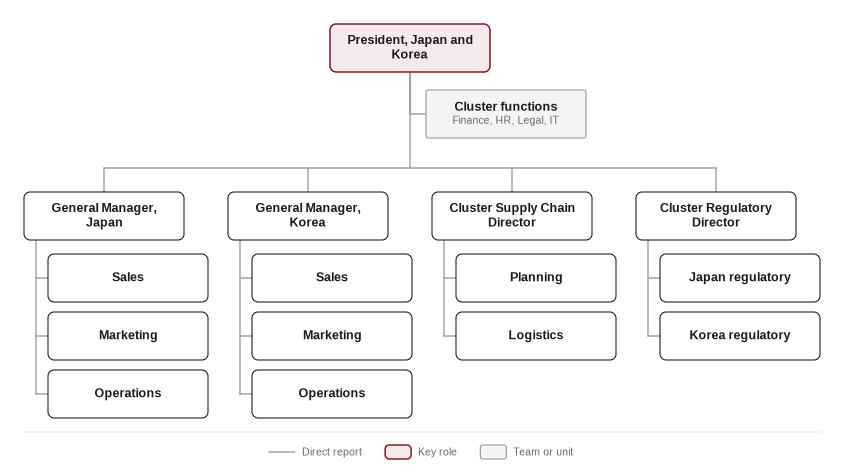 Japan as a North Asia cluster headJapan leads a cluster such as Japan and Korea, with cluster functions shared across both countries.
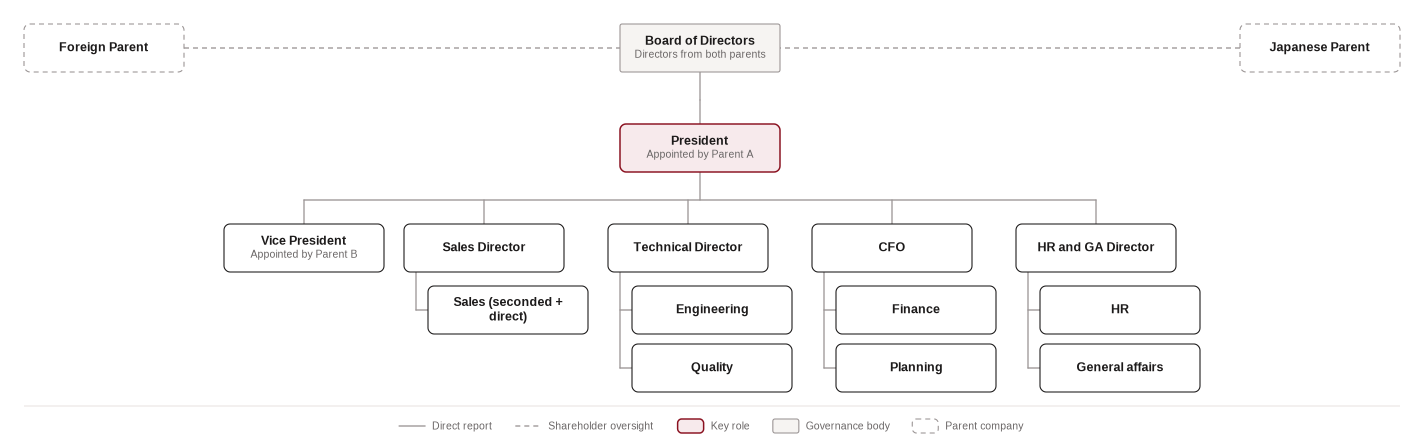 Joint venture in JapanTwo parents share ownership, usually a foreign partner bringing product and a Japanese partner bringing customers and people.
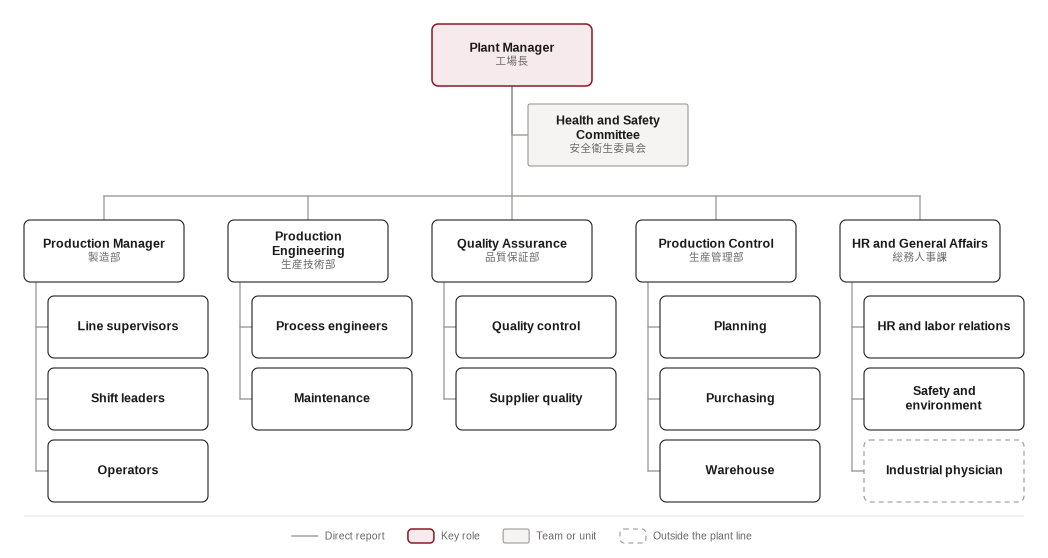 Manufacturing plant in JapanA single site under a plant manager, with the health and safety committee and industrial physician Japanese law requires at this size.
HR function
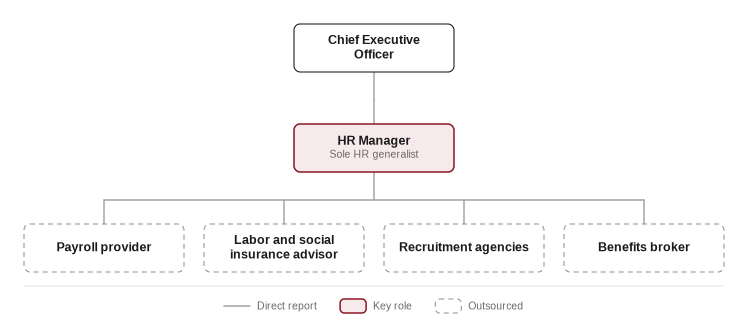 HR team of oneOne HR generalist covers everything, with payroll, labor advice and recruiting bought in.
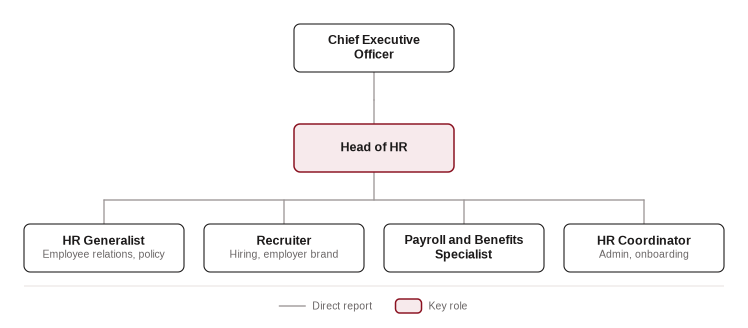 HR generalist teamA small team where each person owns an area but everyone covers for everyone.
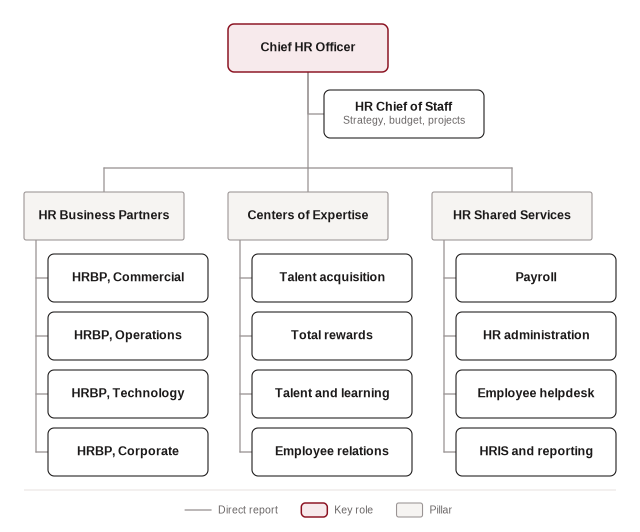 HR three-pillar modelThe Ulrich model: business partners face the line, centers of expertise design, shared services run transactions.
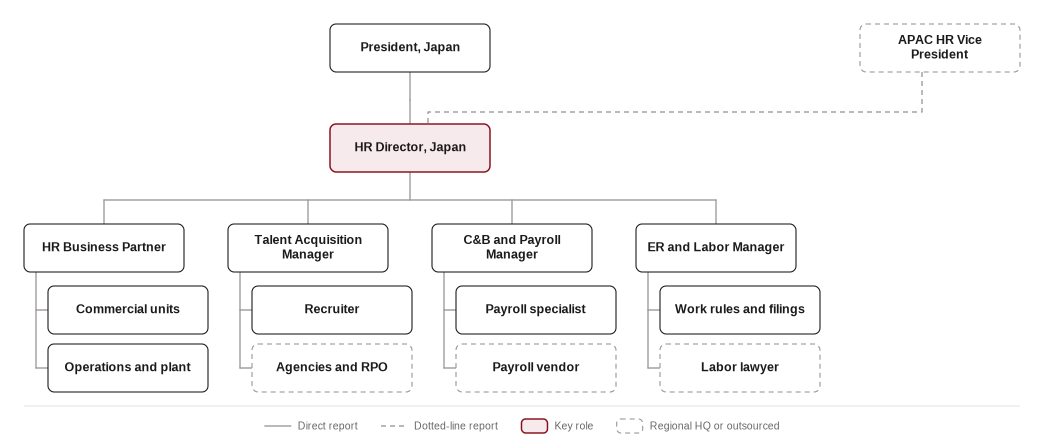 HR team at a foreign subsidiary in JapanA Japan HR director reporting to the country president with a dotted line to regional HR, running a compact bilingual team.
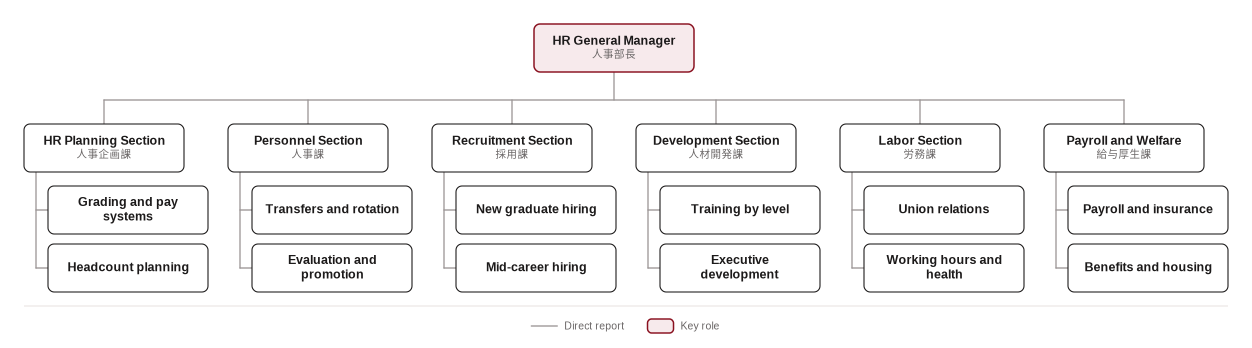 Traditional Japanese HR department (jinji-bu)The classic structure at a Japanese company: sections by task, with new-graduate hiring and rotation run centrally.
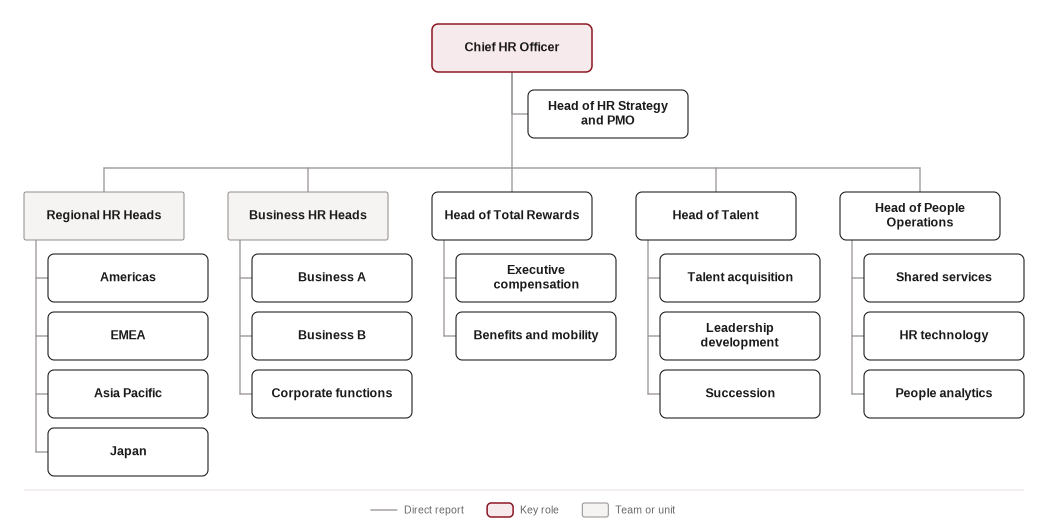 Global CHRO leadership teamA global HR leadership team: regional and business HR heads on one side, global centers of expertise on the other.
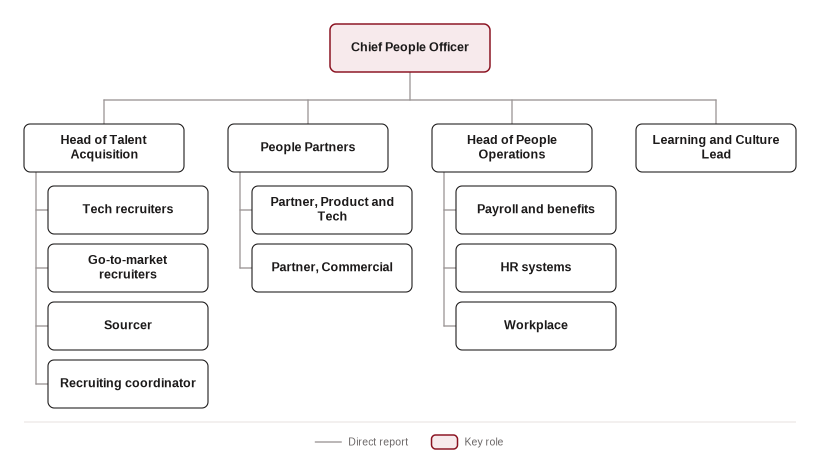 People team at a scale-upHiring is the biggest job, so recruiting is the largest sub-team and people partners are added as managers multiply.
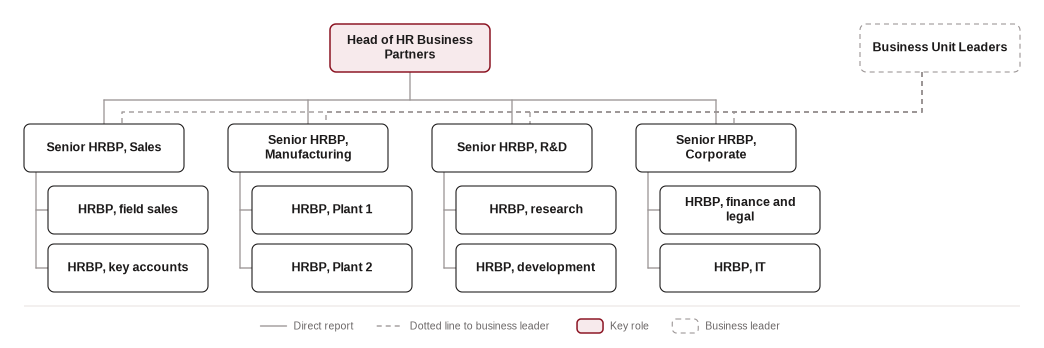 HR business partner team by business unitEach business partner sits on a business leadership team and reports into HR to stay independent.
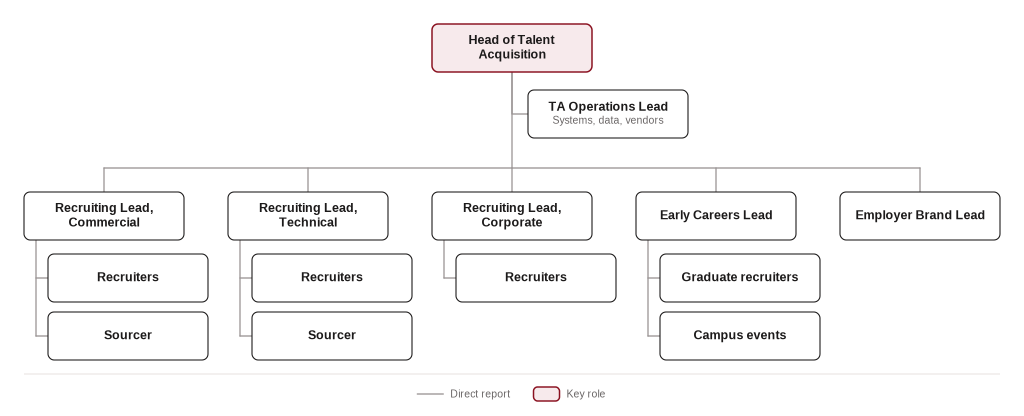 Talent acquisition team, centralizedOne recruiting team serves the whole company, split by job family, with shared sourcing and coordination.
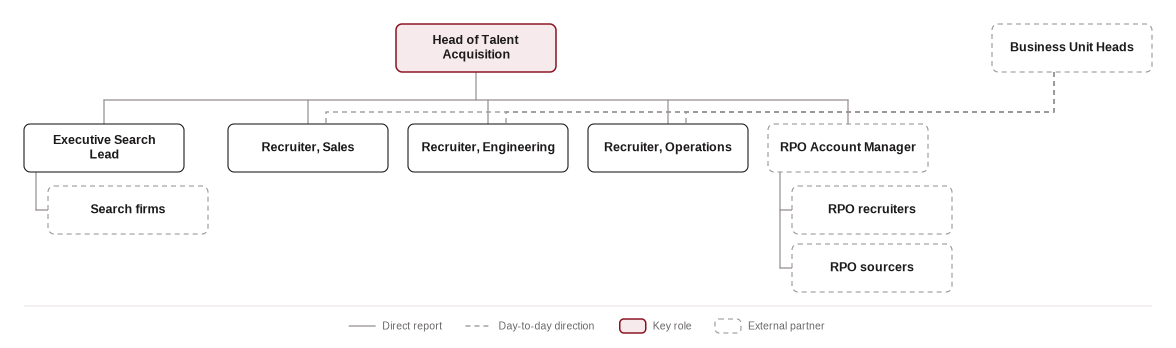 Talent acquisition team, embedded with RPORecruiters sit with the business units they hire for, and an RPO partner flexes with volume.
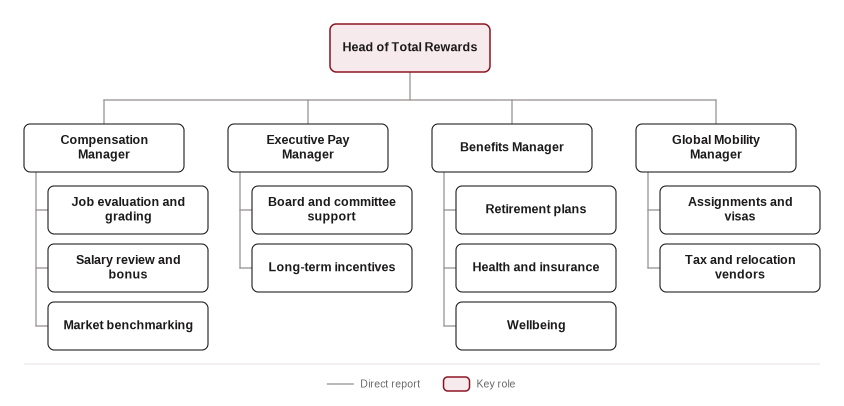 Total rewards teamPay, benefits and mobility designed in one team so the whole package is priced and governed together.
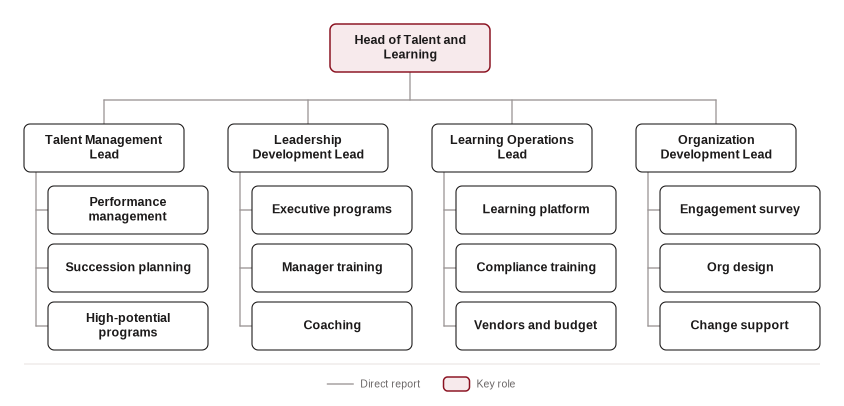 Talent management and learning teamPerformance, succession and learning run as one system so that reviews feed development and succession.
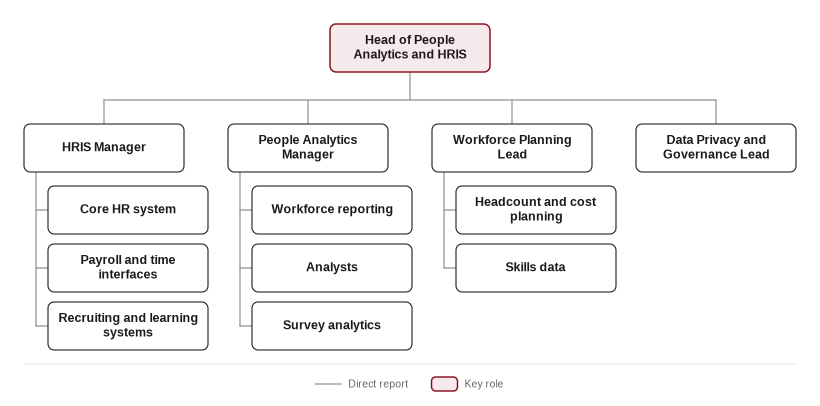 People analytics and HR technology teamHR systems and analytics sit together so data quality, reporting and insight have one owner.
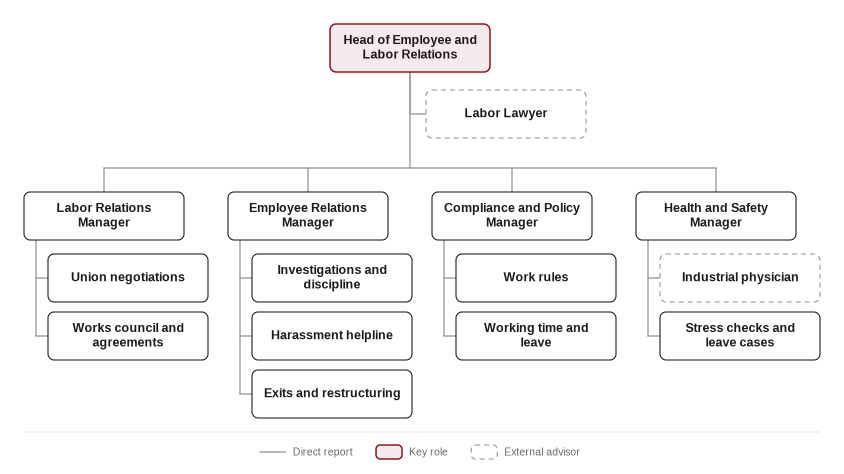 Employee and labor relations teamLabor law compliance, union relations and case handling are specialized enough to need their own team.
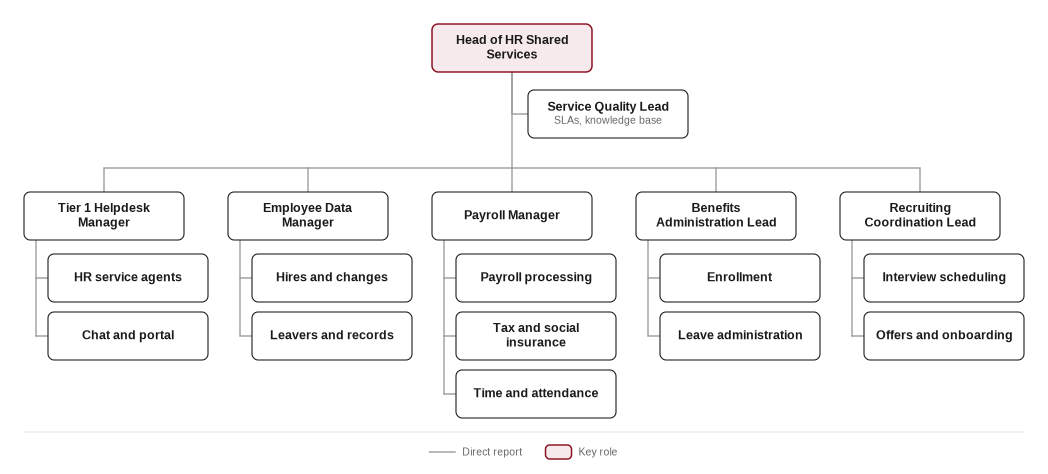 HR shared services centerTransactions are pulled out of local HR into tiers: self-service, a helpdesk, then specialists.
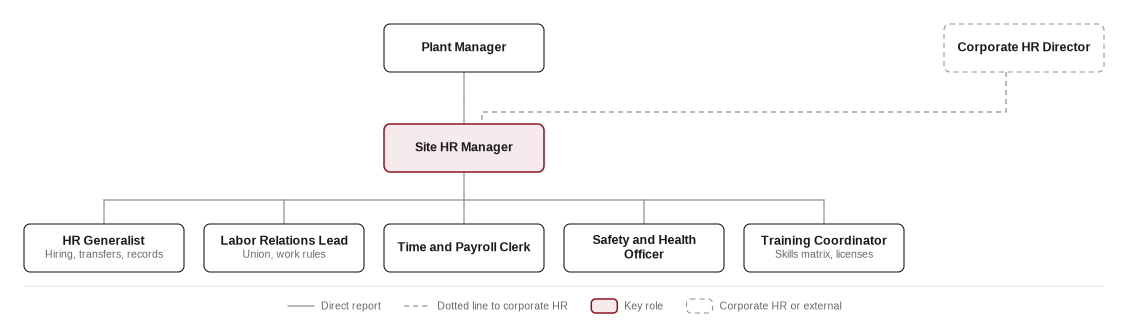 HR at a plant or siteA site HR manager reports to the plant manager with a dotted line to corporate HR, covering a mostly blue-collar workforce.
Other functions
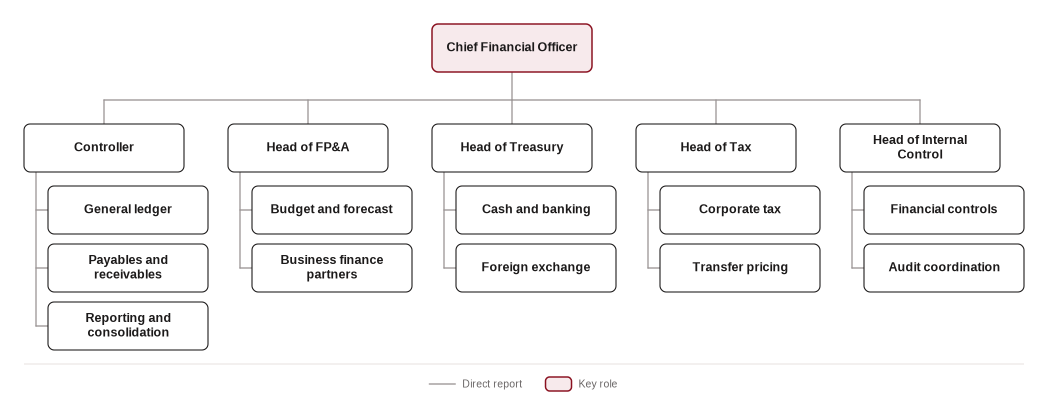 Finance functionA CFO organization that separates recording the numbers, planning with them and managing cash and risk.
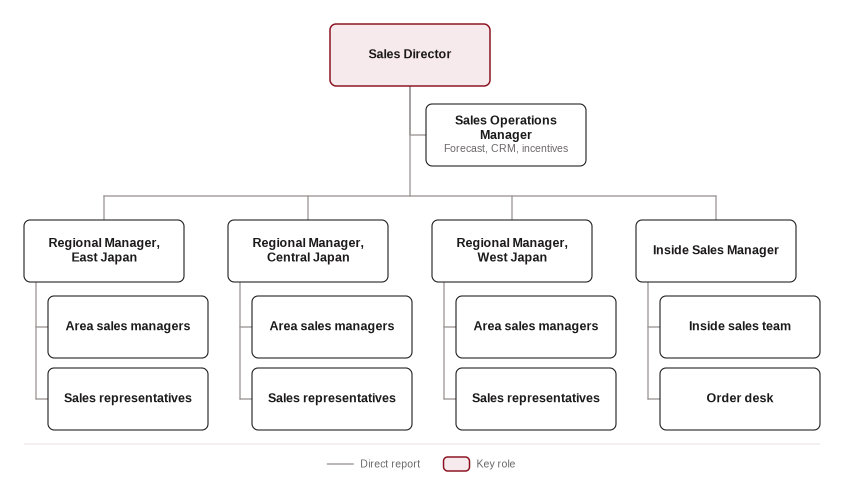 Sales organization by regionCustomers are spread across the country and local presence wins business.
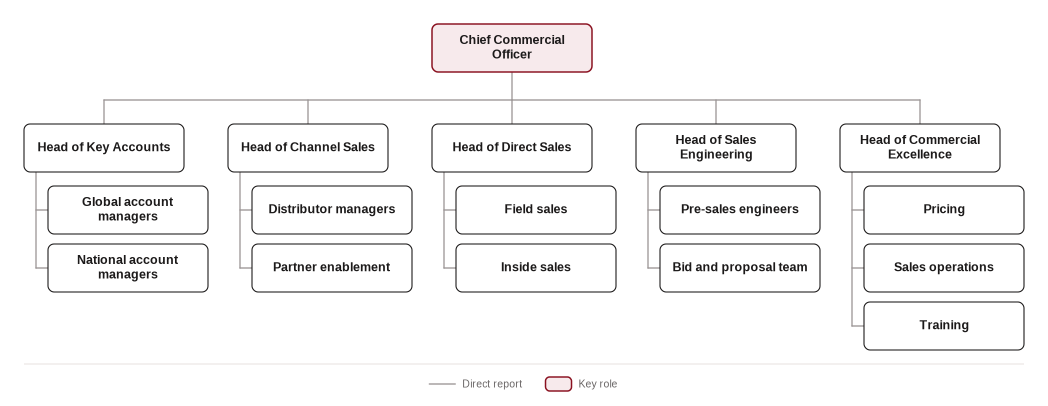 Sales organization by account and channelA few large customers and distributors drive most revenue and need dedicated teams.
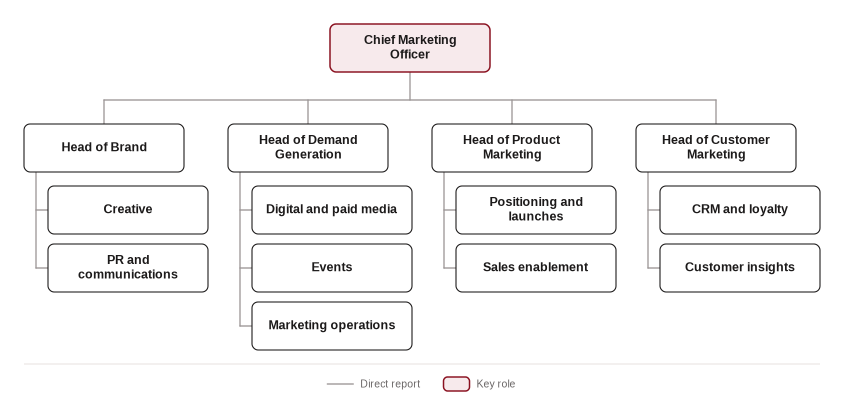 Marketing functionBrand, demand and product marketing are each big enough to need a lead.
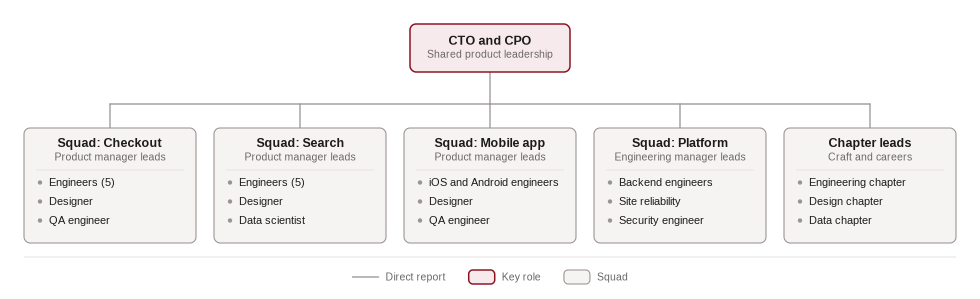 Product and engineering squadsSmall cross-functional squads own a slice of the product end to end, with chapter leads guarding craft standards.
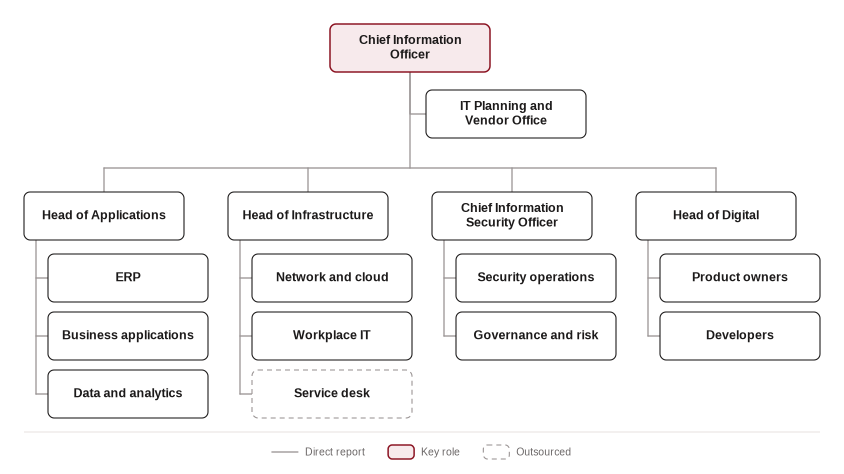 IT functionA CIO organization that separates running systems, building them and securing them.
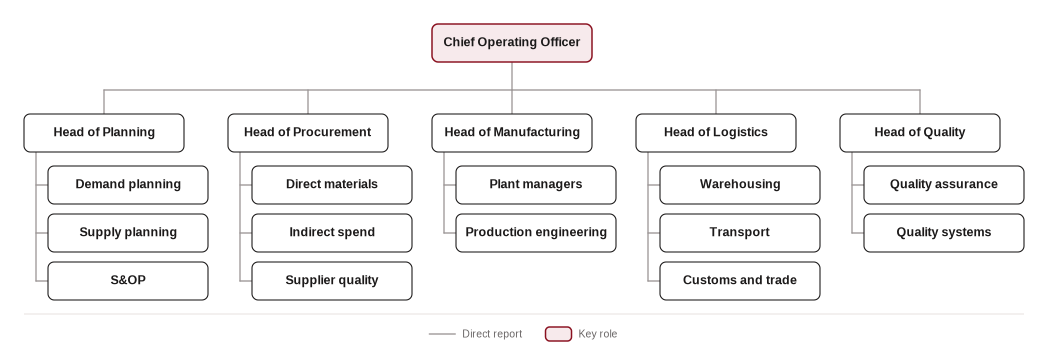 Operations and supply chain functionPlan, source, make and deliver under one leader so trade-offs between cost, stock and service are made once.
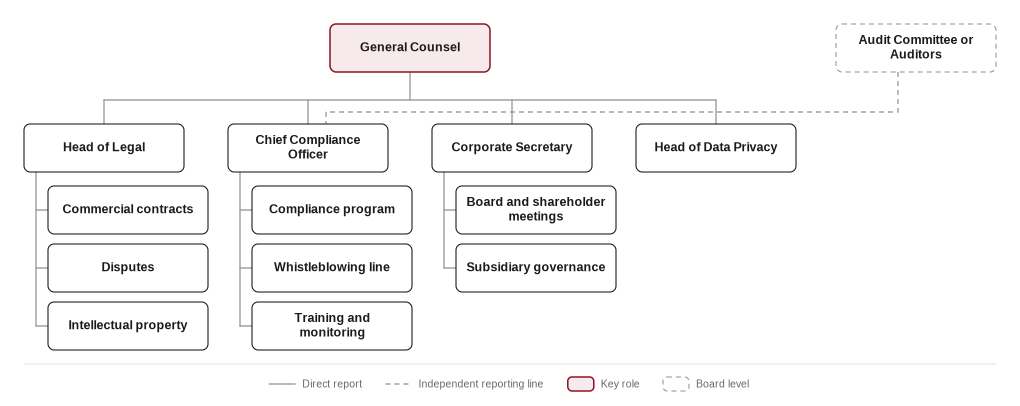 Legal and compliance functionLegal advice, compliance monitoring and corporate secretarial work under a general counsel.
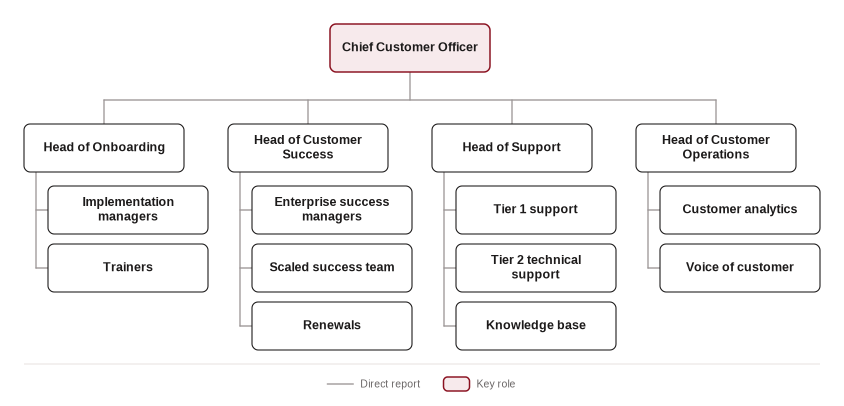 Customer service and success functionSubscription or service revenue depends on renewals, so onboarding, success and support each have an owner.
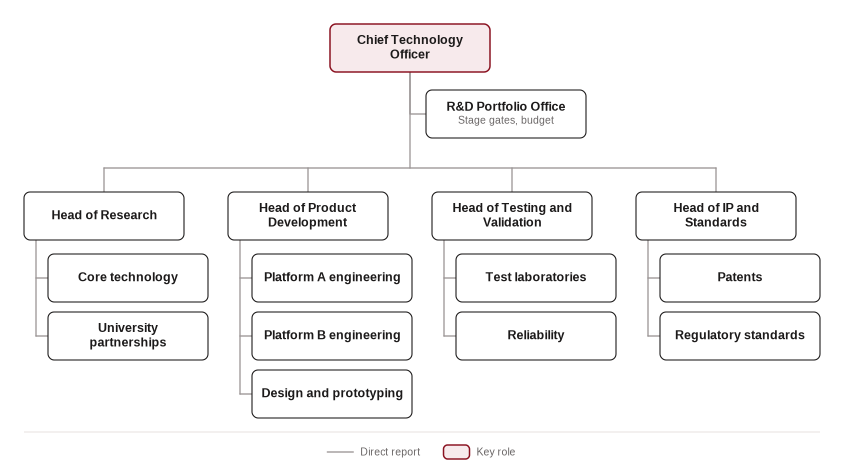 R&D functionResearch, development and the supporting disciplines sit under one technical leader with a portfolio office.
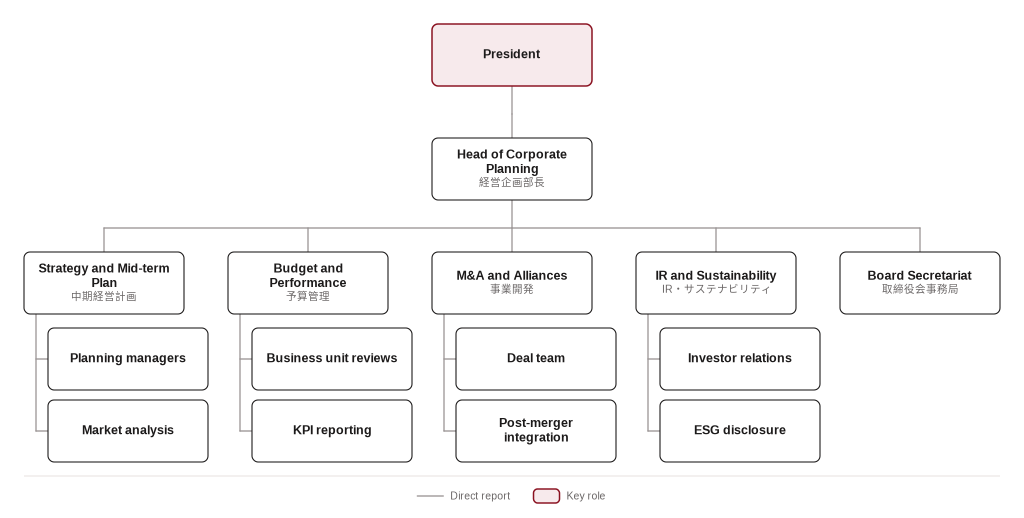 Corporate planning officeThe keiei-kikaku office that typically runs the mid-term plan, budgets, board papers and special projects for the president.
Industries
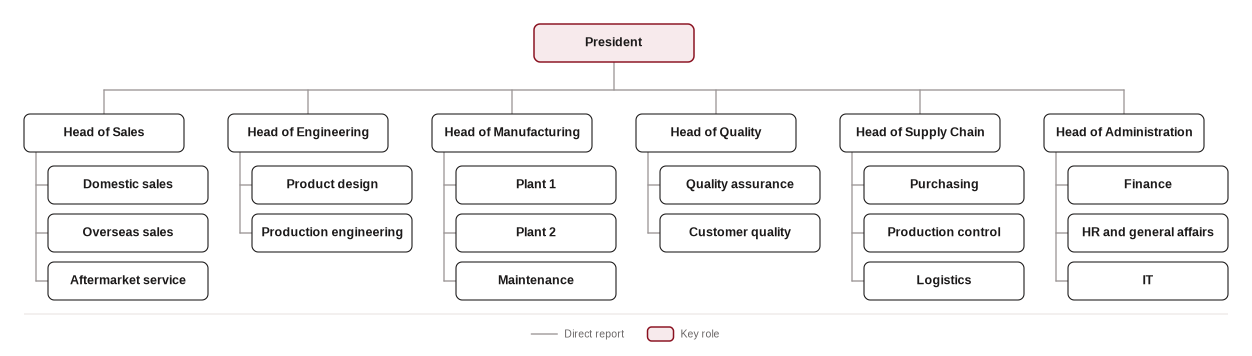 Manufacturing companyAn industrial manufacturer where plants, engineering and sales each need a seat next to the president.
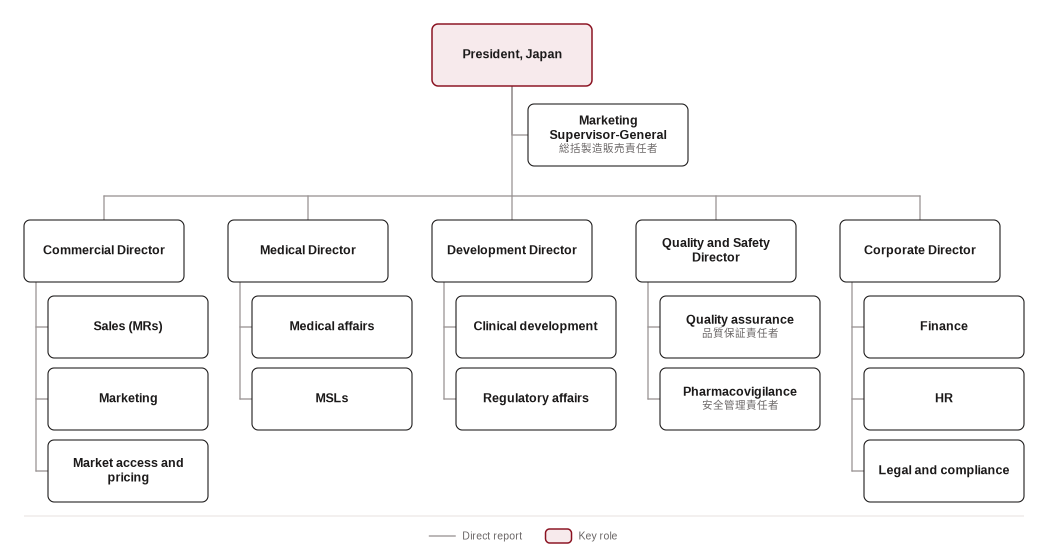 Pharmaceutical affiliate in JapanA marketing authorization holder in Japan, with its three statutory officers and separate commercial and medical arms.
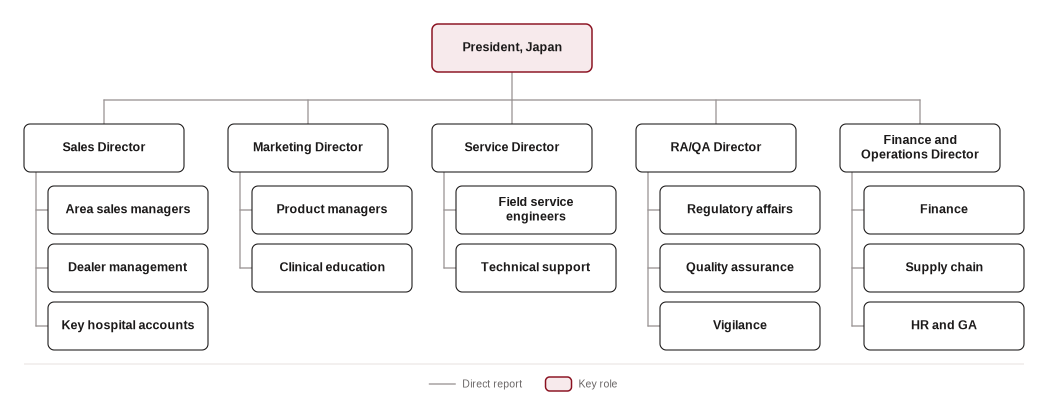 Medical device company in JapanA device business selling through dealers to hospitals, with field service and clinical support alongside sales.
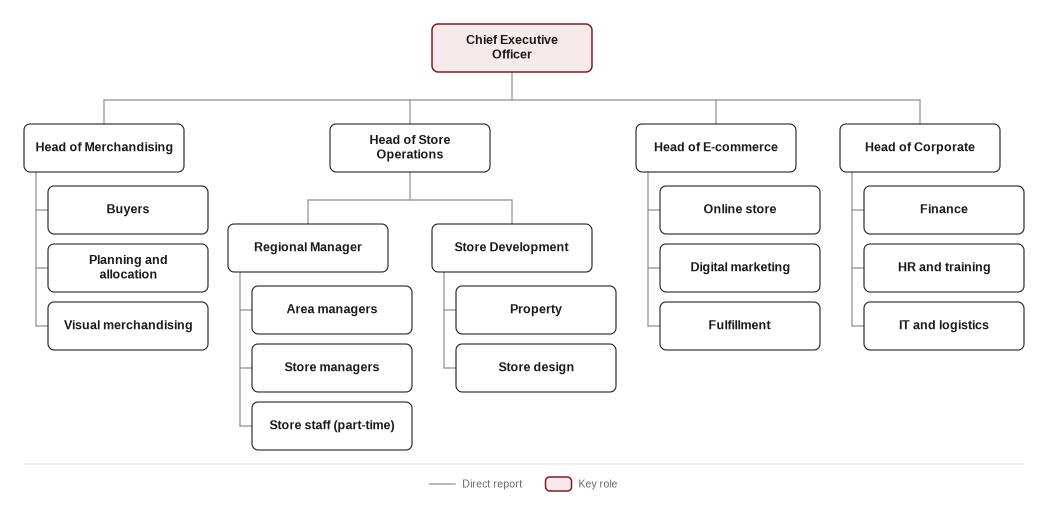 Retail chainHead office buys and plans, and a field hierarchy of areas and stores sells.
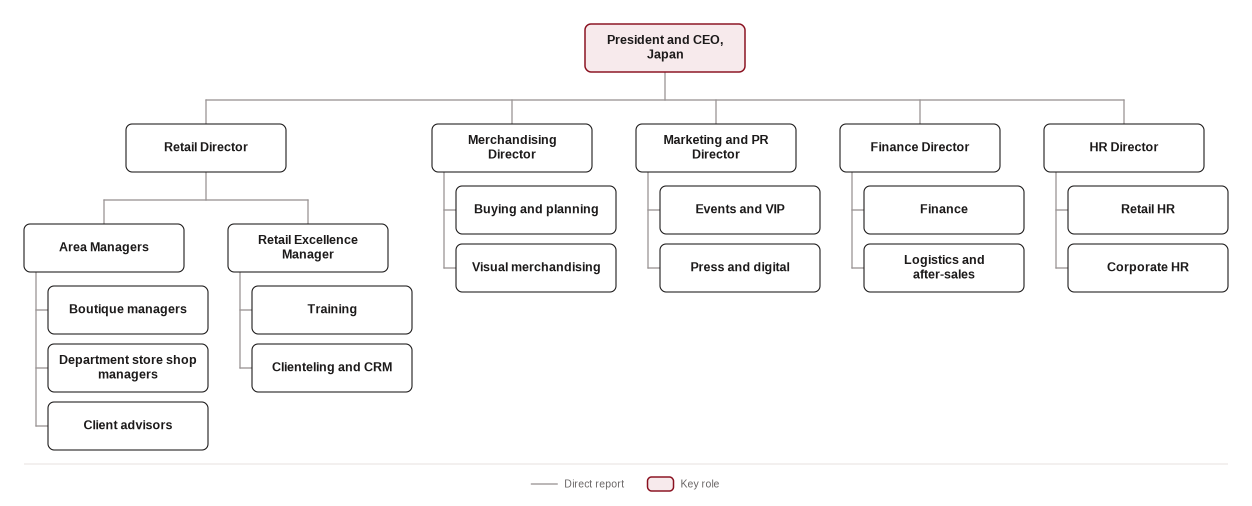 Luxury brand subsidiary in JapanA brand-owned retail business in Japan: boutiques and department store counters, with strong brand control from head office.
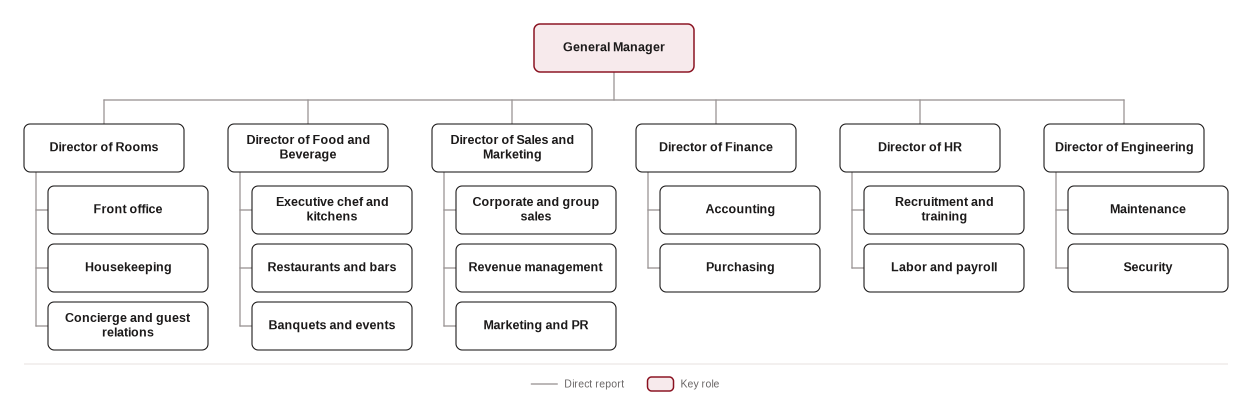 Hotel propertyA full-service hotel under a general manager, split into rooms, food and beverage, and commercial and support teams.
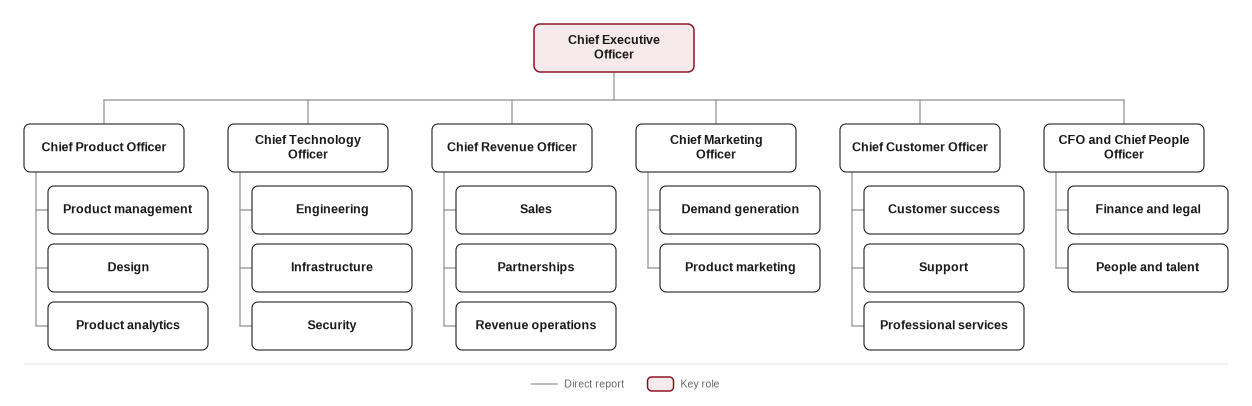 Software (SaaS) companyA subscription software business organized around building the product, selling it and keeping customers.
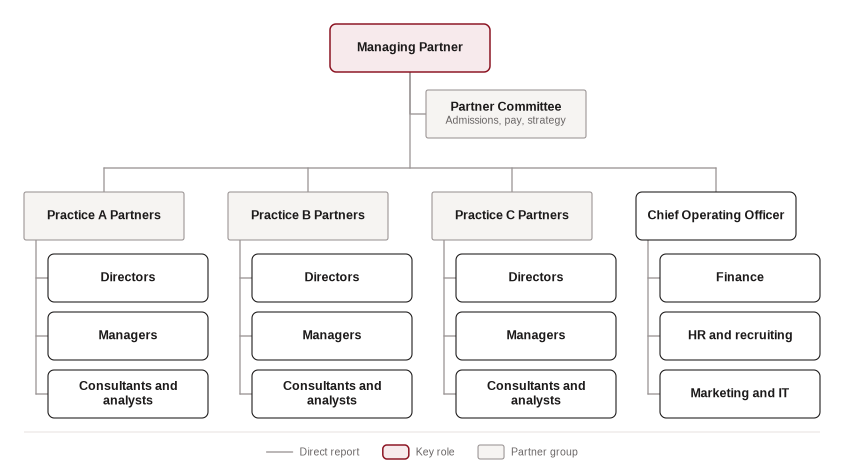 Professional services firmA partnership where partners own the firm, sell the work and lead the teams that deliver it.
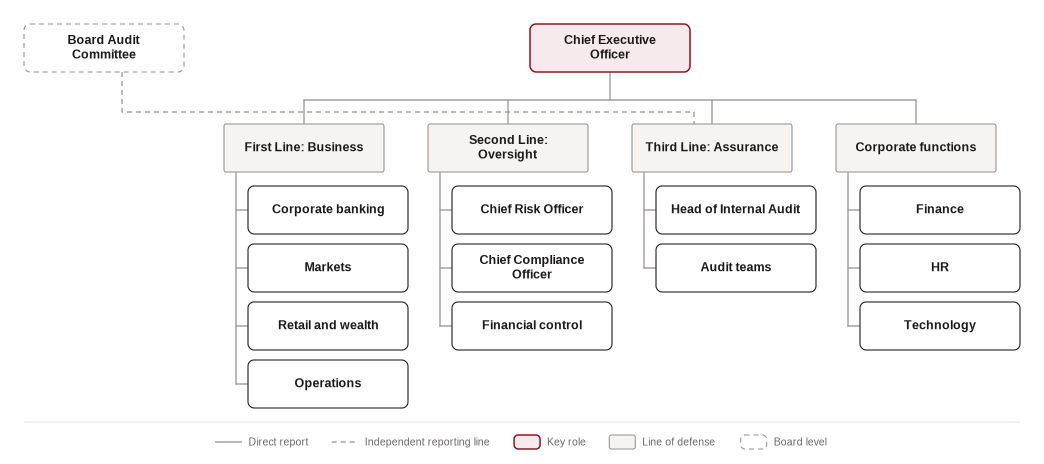 Financial institution: three lines of defenseRegulated financial firms separate those who take risk, those who oversee it and those who audit both.
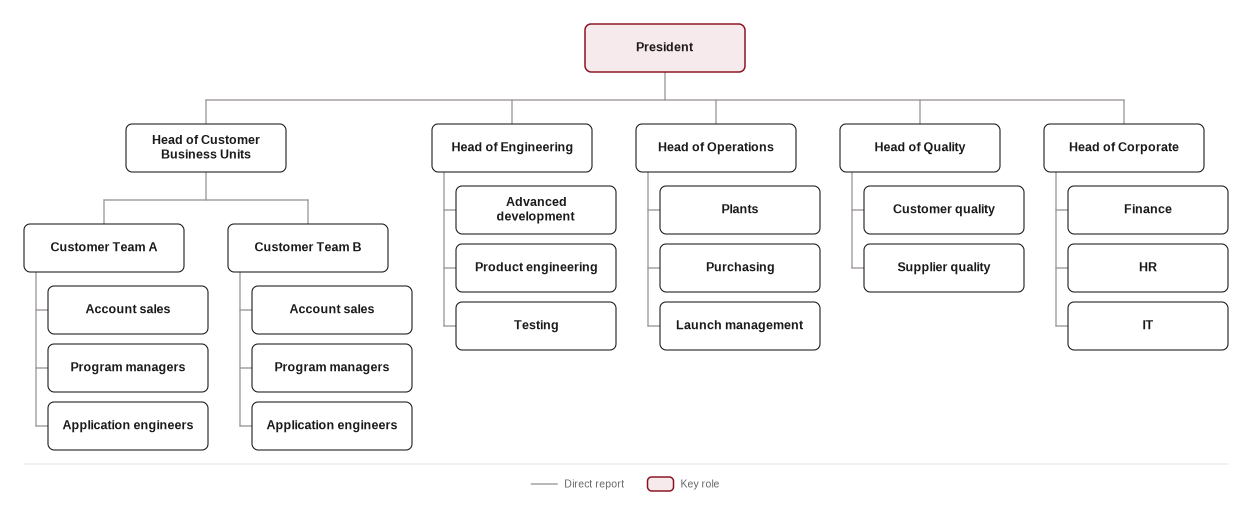 Automotive supplierA parts supplier organized around its carmaker customers, with program managers tying sales, engineering and plants together.
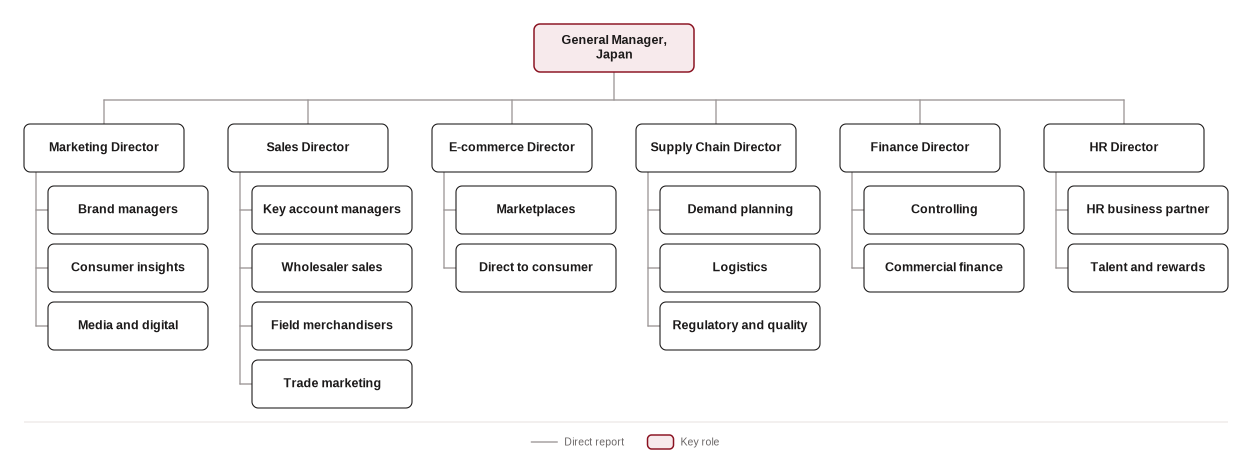 Consumer goods affiliateA branded goods business selling through retailers and wholesalers, with brand teams and trade sales as the two engines.
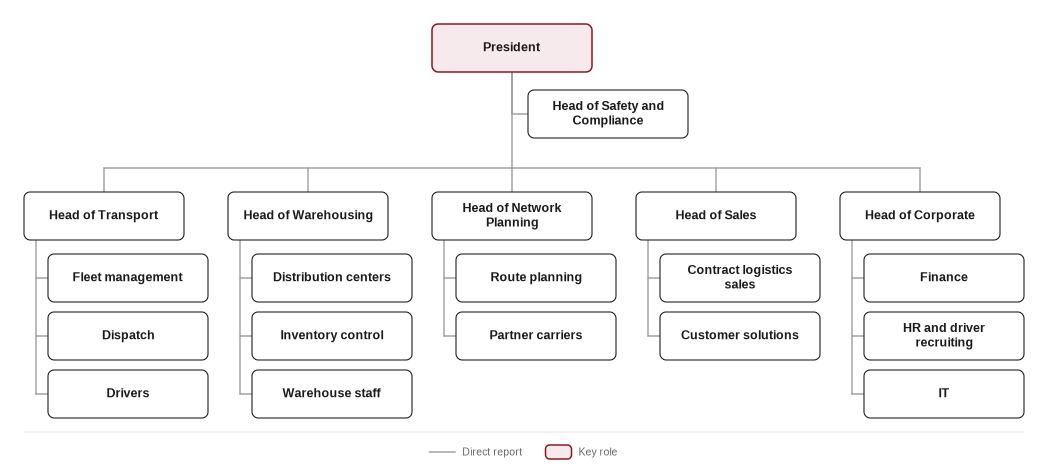 Logistics companyA network business where depots and transport run locally and planning, sales and safety are central.
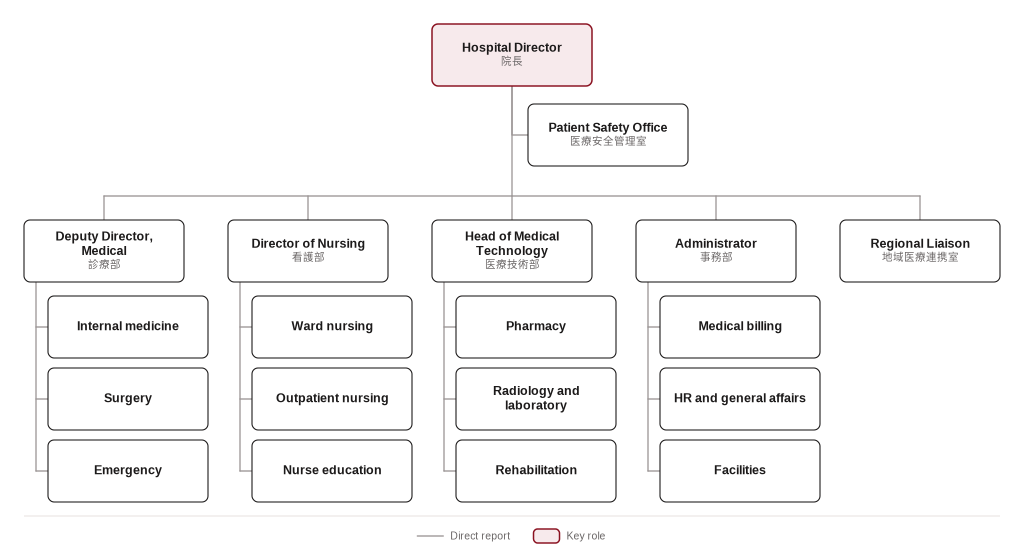 HospitalClinical, nursing and administrative lines run in parallel under the hospital director.
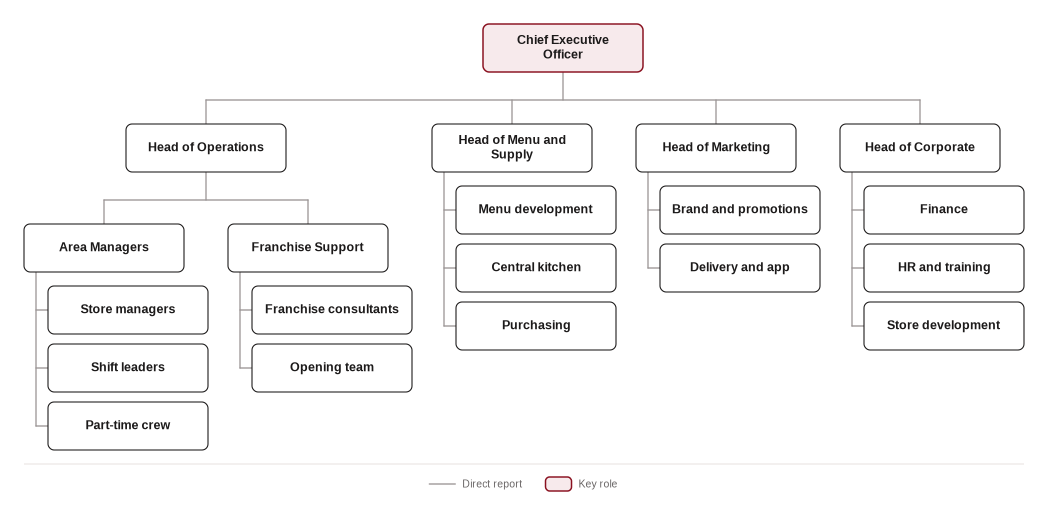 Restaurant or food service groupMany small sites staffed largely by part-timers, run through area managers with a central kitchen and menu team.
Special purpose
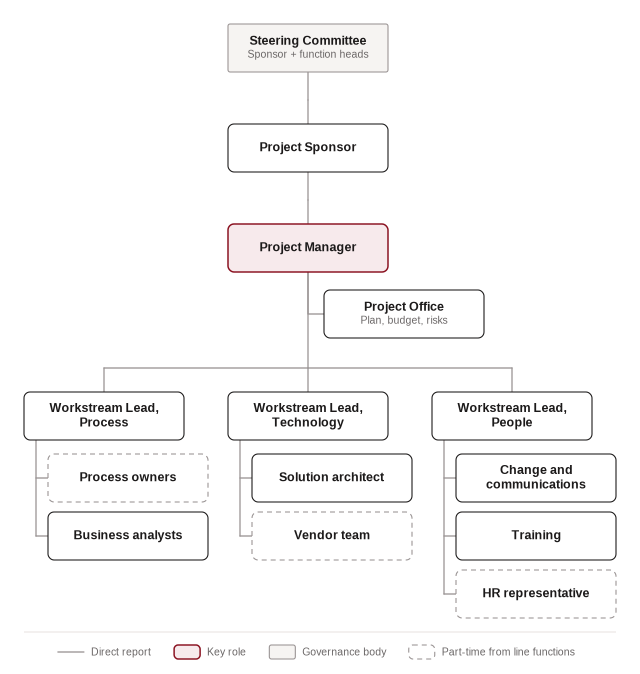 Project team with steering committeeA major project such as a system rollout or site move that borrows people from the line for a fixed period.
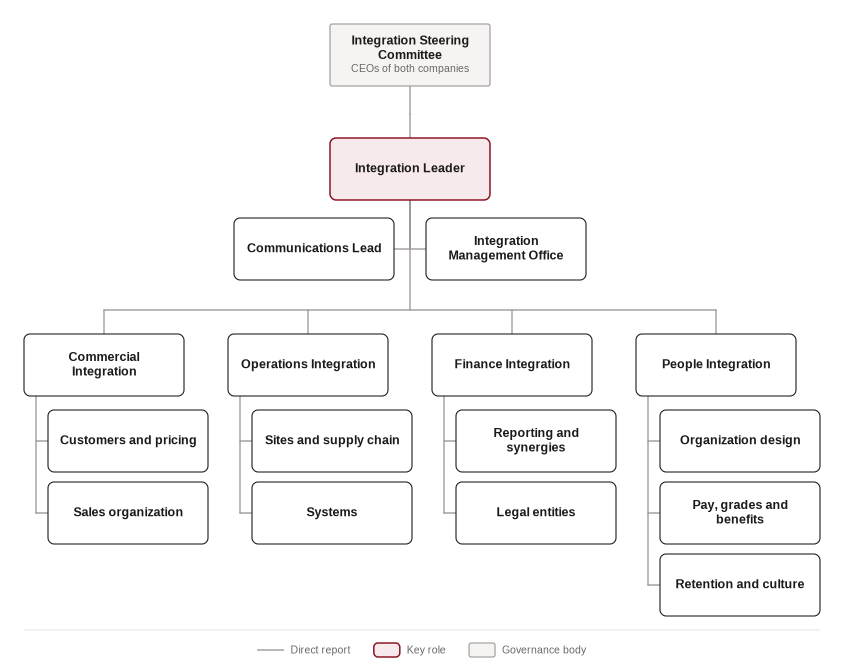 Post-merger integration officeTwo companies are being combined and each function needs a joint team with one lead from each side.
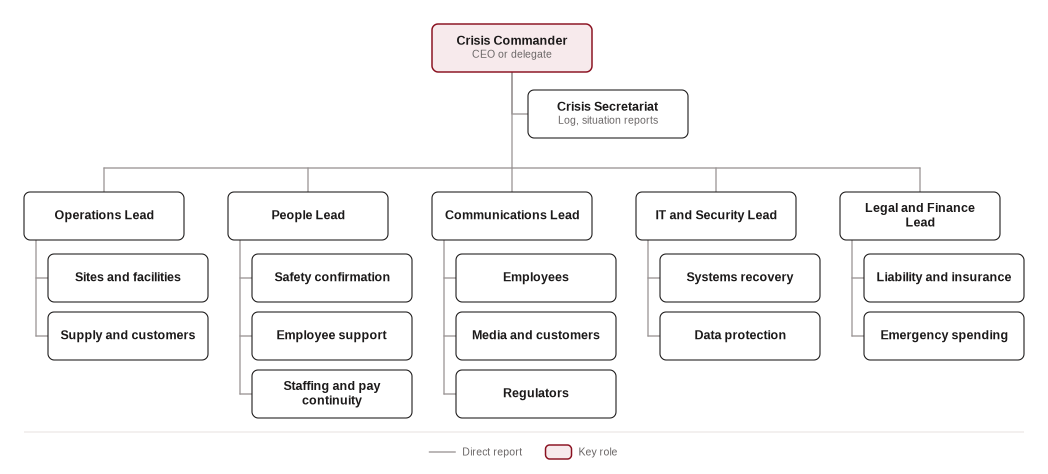 Crisis response teamAn earthquake, cyber attack or product recall: a pre-agreed team takes over decisions and communications.
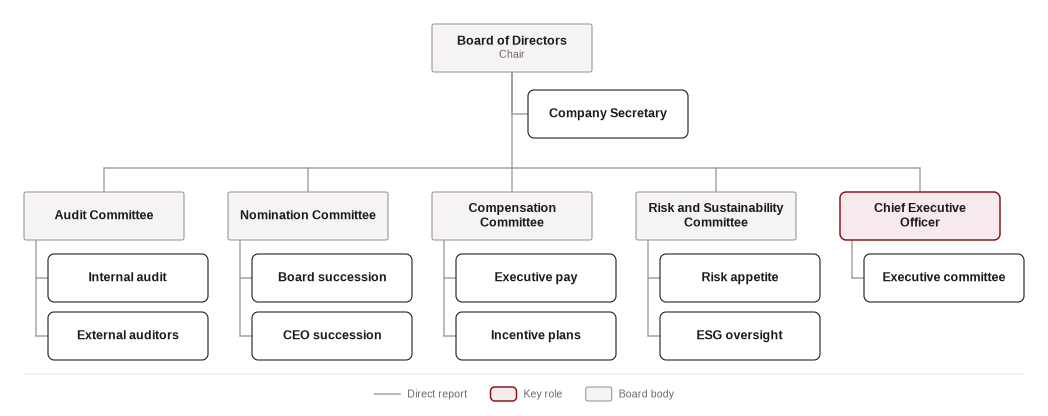 Board and committee structureShowing how board committees relate to the board and to the executives who support them.
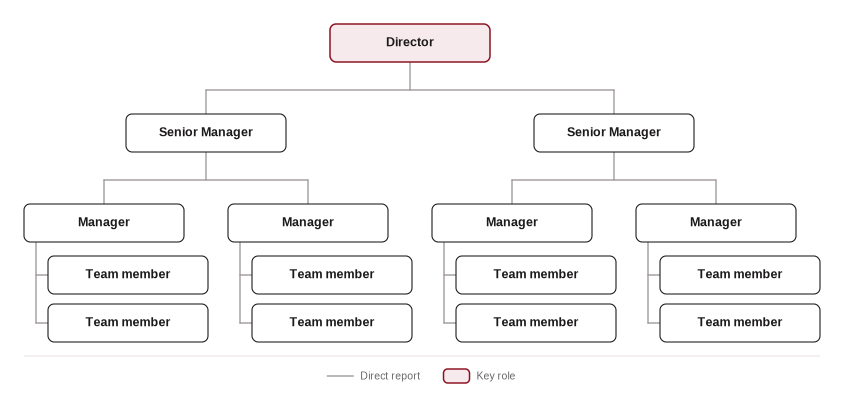 Narrow spans, tall structureShowing a tall structure: 15 people in four layers, two reports per manager. Pair it with the wide-span chart.
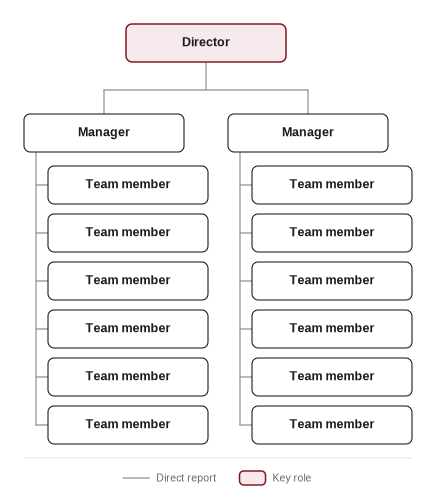 Wide spans, flat structureThe same 15 people in three layers, with six reports per manager. Use it to show what removing a layer does.
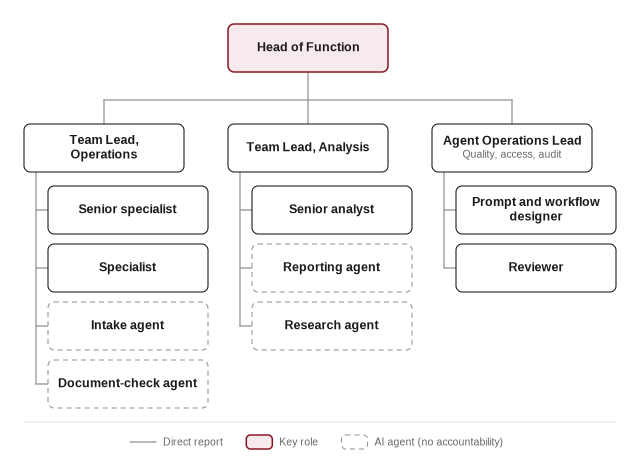 Team with AI agentsShowing which person answers for each AI agent's output. Agents sit under a named owner, never in the reporting line.
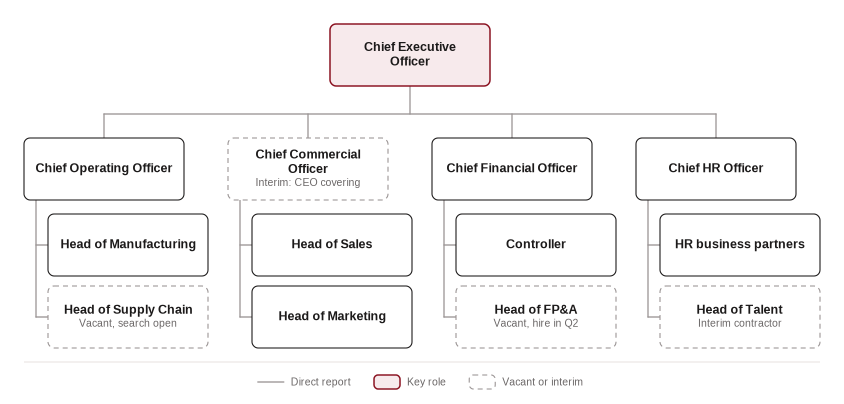 Transition structure with vacanciesCommunicating a reorganization in progress: which seats are filled, which are open and who is covering.
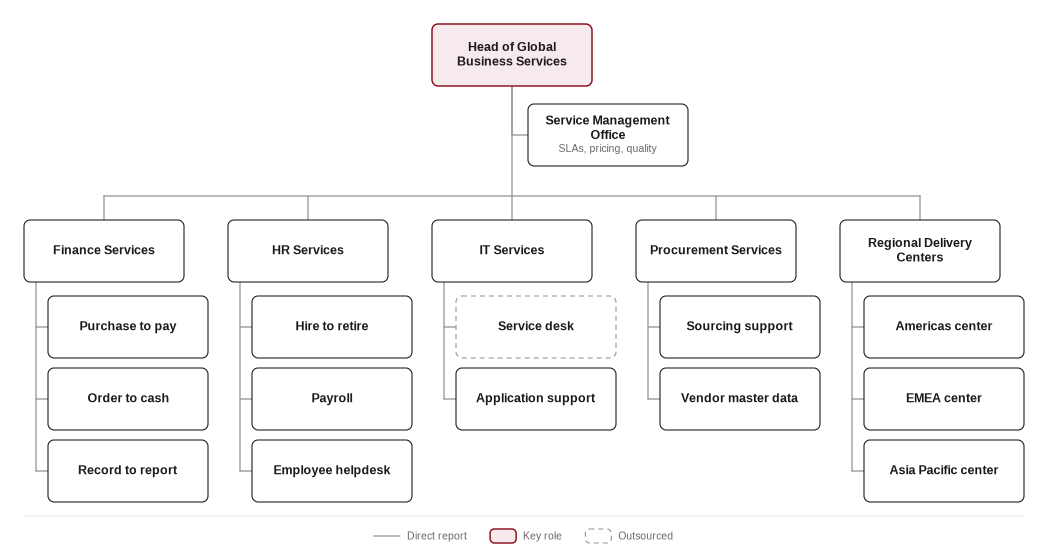 Global business servicesFinance, HR, IT and procurement transactions are combined into one service organization with its own leader.
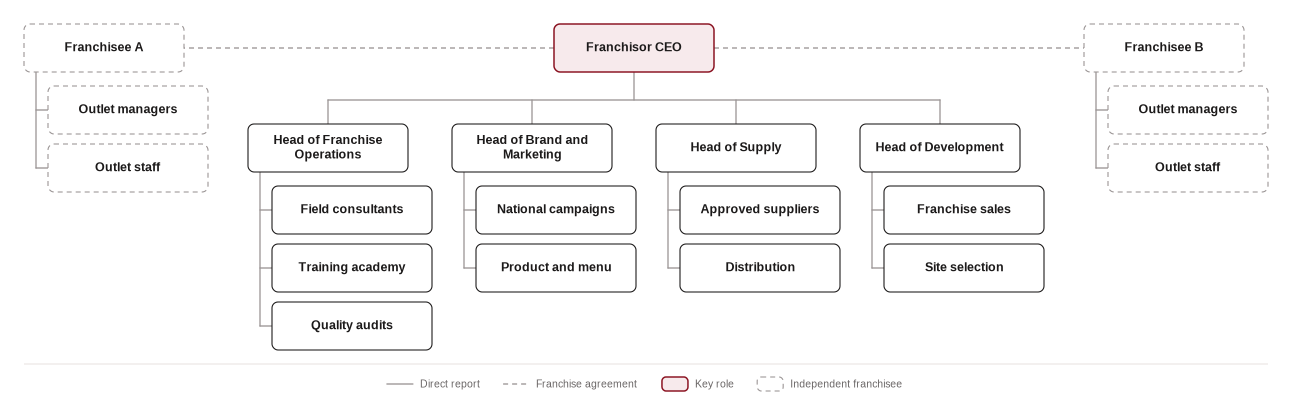 Franchise structureThe franchisor owns the brand and system, and independent owners run the outlets under contract.
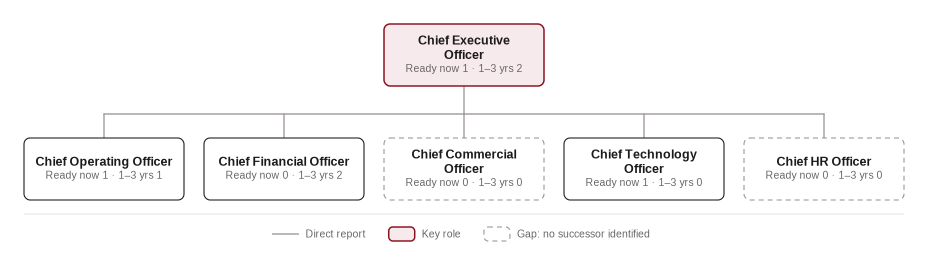 Succession chartReviewing bench strength: each leadership seat shows how many successors are ready now and later.
No chart matches that search. Tell us the structure you are working on and we will share what we have seen work.
These templates are general guidance and are not legal advice. Governance forms, statutory roles and headcount thresholds change; check them with your counsel or labor consultant (社会保険労務士) before you rely on them.

For Employers
Redrawing the chart in Japan?
A new box on the chart is a search waiting to start. Tell us the seat and we will tell you what the market looks like before you open it: the pool, the pay band and the constraint that decides the search.
Talk to us about the seat → Job description templates